Proudly serving Phoenix, Scottsdale, Mesa, Tempe, Chandler, Gilbert & surrounding areasCall or Text 24/7: 602-449-0493
Aerial drone view of a suburban neighborhood with terra-cotta roofs and desert landscaping in Phoenix, AZ.

Selective Weed Control, Pre-Emergent Barriers, and Vegetation Management in Phoenix, AZ

Phoenix Expert Landscaping provides weed control services for homes, HOAs, and commercial properties in Phoenix. Our crews manage pre-emergent barriers, selective post-emergent treatments, mechanical removal, and organic options across lawn turf, planting beds, decomposed granite, rock, and gravel. Weed control can also be coordinated with landscape maintenance, yard cleanup, lawn care, trimming, planting, desert landscaping, rock and gravel work, and irrigation repair.

Phoenix soil surfaces can exceed 140 degrees in summer, yet monsoon moisture can trigger fast growth from puncturevine, spurge, and Bermuda grass. Because the low desert has back-to-back winter and summer germination cycles, waiting for visible weeds gives roots and seed banks time to establish in compacted caliche soil. We identify the weed species, inspect irrigation and soil conditions, and match the treatment to each surface instead of applying one blanket spray.

Applications are calibrated to label rates, scheduled around local soil conditions, and documented with the product rate and date. Request a free on-site estimate for a property-specific plan.

Phoenix Expert Landscaping provides weed control throughout Phoenix, Scottsdale, Tempe, Mesa, Glendale, Chandler, and the greater Salt River Valley.

★ ★ ★ ★ ★4.9/5 Average Rating · 20+ Years of Experience · Thousands of Customers Helped · Licensed & Insured · Residential & Commercial

Phoenix Weed Control Options & Benefits

What Is Professional Weed Control?

Professional weed control combines prevention, active treatment, and landscape corrections. A visit may include a pre-emergent barrier for seeds, selective post-emergent treatment for existing weeds, hand-pulling, or a bare-ground treatment where no desirable plants are present.

Phoenix properties often combine fescue or Bermuda turf, mulched beds, decomposed granite, drainage areas, and gravel beside desert plants. Each surface and weed category requires its own product choice, timing, and application method.

The program begins with weed identification, irrigation and soil checks, and an assessment of valuable plants. Treatments then follow Arizona Department of Agriculture pesticide application guidelines and the directions on the selected product label.

Benefits of a Coordinated Weed Program

A coordinated program addresses seeds, visible growth, irrigation, and landscape surfaces together. Consistent prevention reduces the seed bank while targeted treatment protects the turf, desert plantings, and hardscape already in place.

  • Two pre-emergent cycles timed for Phoenix's summer and winter weeds
  • Species-specific treatment for broadleaf, grassy, annual, and perennial weeds
  • Surface-appropriate care for lawns, beds, gravel, rock, and hardscape
  • Systemic options for weeds that regrow from deep roots or rhizomes
  • Irrigation checks that address recurring wet patches and overspray
  • Spot treatments selected to protect nearby turf and desert plants
  • Written records of application dates, products, and rates
  • One-time, seasonal, monthly, and bi-monthly service options
Weed Management Services

Professional Weed Control Services

Choose a service that fits the weed stage, landscape surface, and property type. Phoenix Expert Landscaping can combine preventive and active treatments during one coordinated visit or build them into an ongoing landscape maintenance schedule.

Pre-Emergent Weed Prevention

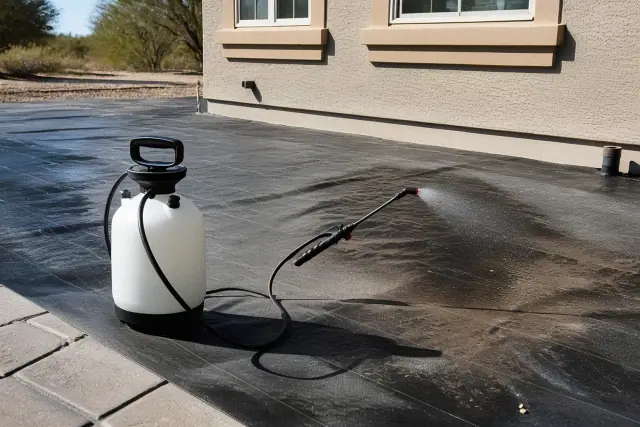
Handheld pump sprayer and treated soil on a weed barrier fabric site in Phoenix, AZ.

Prodiamine or pendimethalin forms a barrier in the top inch or two of soil to stop germinating seeds from establishing roots. Depending on the surface, the product is applied dry or as a liquid and then watered in within 24 hours to activate the barrier.

Request Estimate

Selective Post-Emergent Treatment

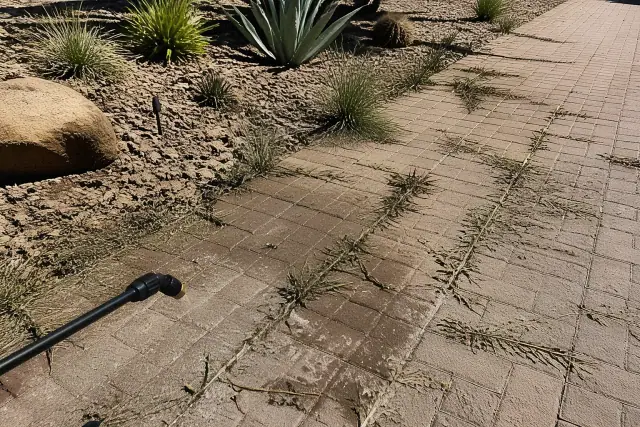
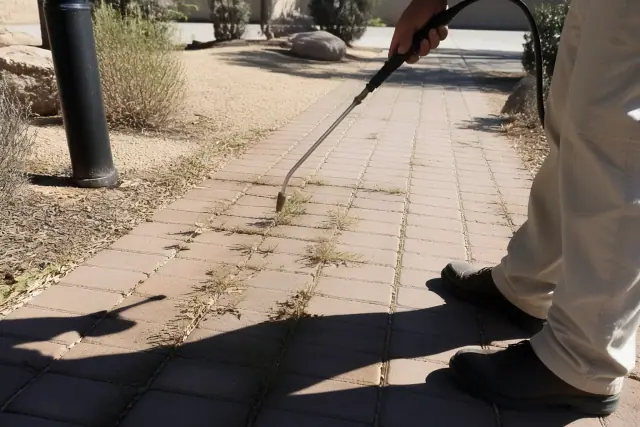
Selective post-emergent weed treatment on a paved path in Phoenix, AZ, with visible wilting weeds between stones.

Selective products target visible broadleaf or grassy weeds without treating every plant the same way. Depending on the identified weed, this may include a 2,4-D combination or an MSMA-based product; common broadleaf product labeling may call for around one quart per acre, but the actual label rate controls every application.

Request Estimate

Rock, Gravel & Hardscape Weed Control

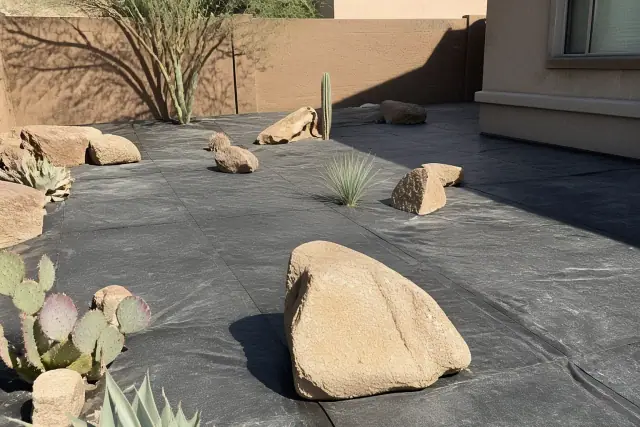
Weed barrier fabric installed on a desert landscape foundation for rock covering in Phoenix, AZ.

Gravel beds, patios, driveways, pathway joints, and drainage areas can receive a non-selective treatment such as glyphosate concentrate where no desirable plants are present. Crews use hand-pulling or another controlled method where drift toward nearby plantings would be a concern.

Request Estimate

Organic & Mechanical Weed Control

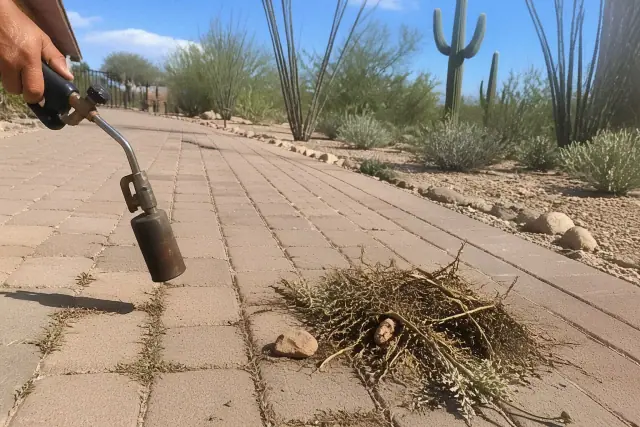
Technician using a propane torch for weed control on a Phoenix, AZ path with pulled roots and desert gravel nearby.

Mechanical removal, flame treatment, and horticultural vinegar-based sprays provide alternatives for clients who prefer reduced chemical use. These methods generally require more frequent visits and can have lower kill rates on established perennial root systems than systemic chemical treatment.

Request Estimate

Residential Weed Control

Technician using a pump sprayer to apply weed control to plants growing between stones on a paved path in Phoenix, AZ.

Residential plans are built around the property's actual mix of lawn, planting beds, fence lines, rock, and desert landscaping. Product choice and timing can be adjusted for new seed, new plantings, edible gardens, and areas with frequent child or pet use.

Request Estimate

Commercial & HOA Weed Control

Technician using a handheld spray wand on weeds between stones in a Phoenix, AZ landscape.

Office parks, retail centers, HOA common areas, medians, retention basins, and shared fence lines need predictable coverage across multiple spaces. Commercial accounts can use set service dates, coordinated routing around business activity, and product-usage records for property managers or board meetings.

Request Estimate
Treatment Options

Weed Control Treatment Options

Effective treatment depends on whether the goal is to stop germination, eliminate active growth, protect a sensitive planting, or maintain broad property coverage. The options below can be combined according to weed pressure, season, and landscape design.

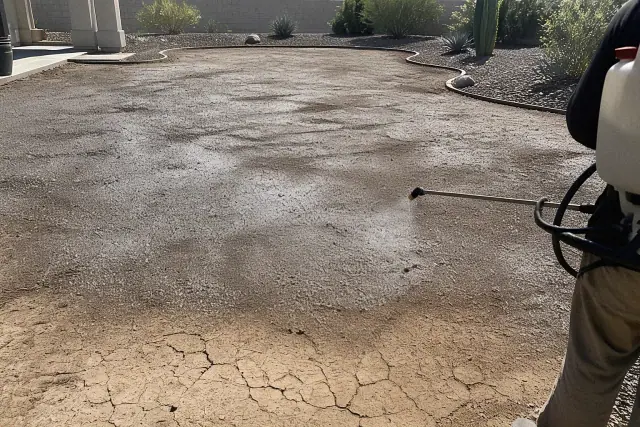
A professional backpack sprayer treats bare soil for weed control in a Phoenix, AZ landscape.

Seasonal Pre-Emergent Program

Pre-emergent timing follows Phoenix's two weed-germination windows rather than a once-a-year calendar. Soil-temperature tracking helps place the barrier before seeds begin establishing roots.

  • Late January through mid-February treatment ahead of summer annuals
  • Late September through October treatment ahead of winter annuals
  • Soil-temperature checks account for heat-island differences across the valley
  • Summer annuals can germinate above 65-70 degrees from February through April
  • Winter annuals germinate around 55-70 degrees in October and November
Request Estimate
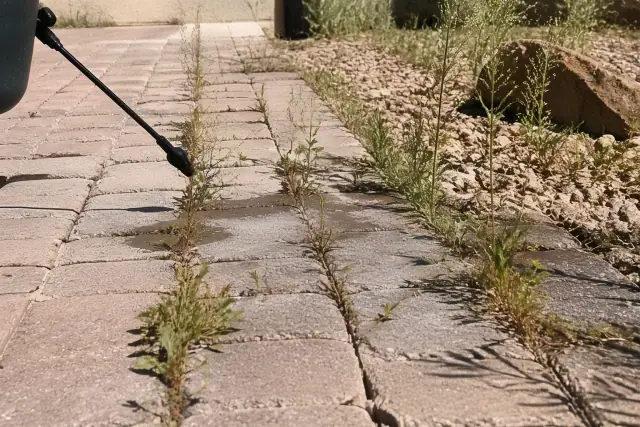
Weed treatment application on stone pavers in Phoenix, AZ.

Active Infestation Treatment

Once weeds are growing, post-emergent treatment is selected by species, surface, and nearby plants. This avoids wasting a broadleaf product on a grassy weed or placing a non-selective product near desirable vegetation.

  • Broadleaf and grassy weeds are identified before product selection
  • Most treatments show visible dieback within 7-14 days
  • Perennial regrowth may need a second application 3-4 weeks later
  • Newly seeded lawns and new plantings are flagged before treatment
  • Spot applications limit exposure around desirable plants
Request Estimate
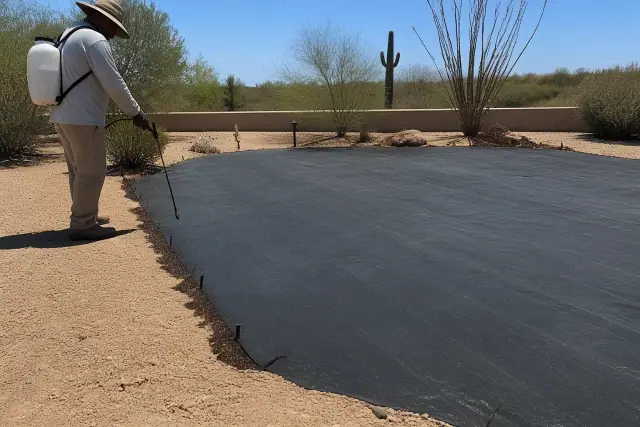
A worker applying herbicide along landscape fabric at a job site in Phoenix, AZ with desert plants in the background.

Desert Landscape Prevention

Xeriscape weed prevention combines treatment with intact physical barriers and carefully tuned drip irrigation. Thin spots, fabric gaps, and organic debris are corrected because these are common entry points for weeds in low-water landscapes.

  • Maintain 2-3 inches of rock or gravel over landscape fabric
  • Use a 2-3 inch mulch layer to block light in planting beds
  • Protect agave, brittlebush, and desert marigold with careful product placement
  • Clear dust and organic debris that collect between rock and gravel
  • Watch for new seed pressure near washes, canals, and undeveloped parcels
Request Estimate
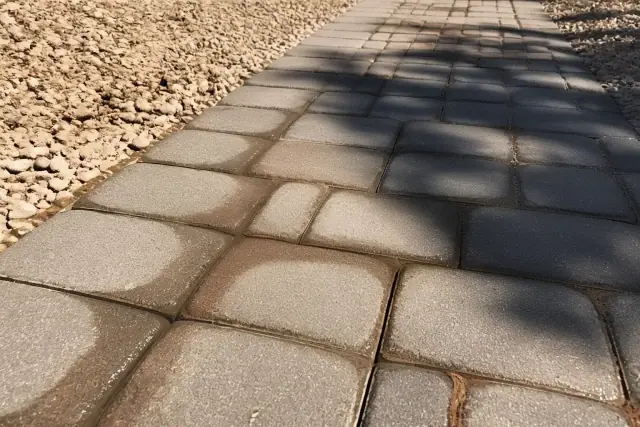
Concrete pavers with precision weed control treatment and sun-bleached gravel in Phoenix, AZ.

Turf & Irrigation Weed Management

Recurring lawn weeds often point to irrigation coverage or scheduling problems as well as seed pressure. Checking heads, emitters, turf condition, and planned overseeding helps crews choose a treatment that fits the lawn's current stage.

  • Inspect irrigation heads, drip emitters, valves, and watering schedules
  • Correct a leaking valve that repeatedly wets the same 10-square-foot patch
  • Avoid weed-and-feed products on newly seeded lawn areas
  • Separate fertilization and weed control for better timing and rate control
  • Adjust applications when turf is stressed by extreme summer heat
Request Estimate
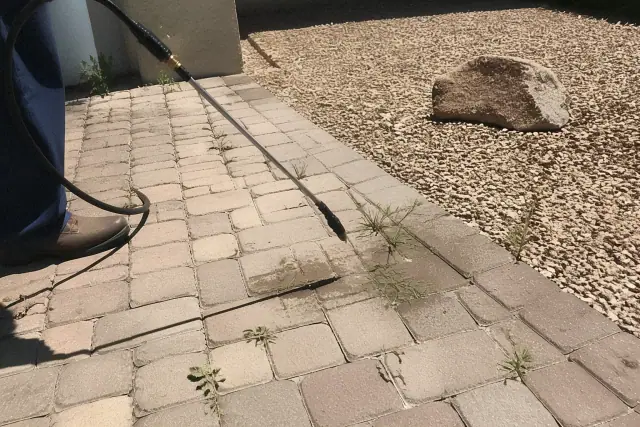
A technician using a spray wand for weed control between stone pavers in Phoenix, AZ.

Ongoing Weed Control Maintenance

Phoenix has no true dormant weed season, so monthly or bi-monthly visits can catch new growth before it matures. Ongoing care also coordinates pre-emergent timing, post-monsoon treatment, and irrigation checks with other landscape work.

  • Use monthly or bi-monthly visits to catch growth before it sets seed
  • Schedule follow-up around the product's typical 60-90 day residual period
  • Maintain two full preventive cycles each year
  • Plan active treatment after July and August monsoon flushes
  • Remove growth early because one mature weed can drop thousands of seeds within weeks
Request Estimate
Finding Your Right Fit

Choosing the Right Weed Control Approach

The right approach depends on the weed species, whether growth is active or still at the seed stage, the surrounding plants, and the landscape surface. A walk-through also considers irrigation, soil compaction, property size, infestation density, child or pet use, and chemical preferences before a plan is quoted.

Species-Specific Assessment

Crews distinguish broadleaf weeds such as spurge and London rocket from grassy weeds such as Bermuda grass and annual bluegrass. Correct identification is essential because the product chemistry for each category is different.

Calibrated Label-Rate Application

Application equipment is calibrated to the product label, and active ingredients are rotated to reduce resistance. Product selection and timing also account for Phoenix heat, which can shorten the standard interval for some herbicides.

Written Service Records

Every property receives a written record of the application date, rate, and product used. This gives homeowners and property managers a clear treatment history and a basis for scheduling the next visit.

What Sets Us Apart

Why Choose Us for Weed Control

Phoenix averages roughly 300 days of sunshine, with summer highs regularly exceeding 105-110 degrees, so local scheduling and surface-specific treatment matter. Phoenix Expert Landscaping adjusts product choice, timing, and follow-up to the property's weed species, irrigation, plants, and exposure instead of relying on a one-formula program.

Request a Free Estimate

Back-to-Back Germination Cycles

Phoenix winter and summer annuals germinate in separate windows with almost no dormant period between them. Pre-emergent applied even two to three weeks late can miss a fast-moving window once daytime highs climb above 80 degrees.

Deep Roots & Persistent Seed Pods

Bermuda grass spreads through rhizomes, nutsedge persists in irrigated turf, and puncturevine leaves sharp seed pods that can remain in soil for years. Hand-pulling may leave root fragments behind, so established growth often needs systemic treatment and follow-up.

Overwatering & Irrigation Leaks

Overwatered turf and drip zones are the leading driver of repeat weed growth in this climate. A leaking valve, overspraying emitter, or poor schedule can keep feeding the same patch even after visible weeds are removed.

Monsoon-Driven Weed Flushes

Peak summer heat can slow weeds on dry ground, but brief monsoon moisture triggers rapid annual growth in exposed Sonoran Desert soil. Gravel beds are vulnerable where dust and organic matter collect, while open washes and undeveloped land add windblown seed pressure.

Thin Gravel & Fabric Gaps

Thin rock coverage and torn landscape fabric leave openings where weeds can root. Prevention works better when crews pair the appropriate barrier treatment with restored gravel depth, intact fabric, and drip irrigation that stays off bare soil.

Wrong Products Near Desert Plants

A non-selective product or incorrect rate can stress turf, shrubs, and Arizona native plants growing beside the target weed. Plant spacing and species are checked before application, and spot treatment is favored in beds with valuable or mature plantings.

How It Works

Our Weed Control Process

The process moves from inspection to species identification, site checks, treatment selection, documented application, and follow-up planning. Each decision is tied to the weeds and landscape conditions present on the property.

01.

Walk Through the Property

The visit starts with a walk-through of lawns, beds, fence lines, rock, gravel, pathways, and hardscape. The crew notes active growth, weed density, desirable plants, and areas that need a controlled application method.

02.

Identify Weeds & Surfaces

Weeds are classified as broadleaf or grassy, annual or perennial, and matched to their surface. This distinguishes spurge, purslane, pigweed, London rocket, annual bluegrass, Bermuda grass, nutsedge, and puncturevine before treatment begins.

03.

Check Irrigation & Soil

Irrigation coverage, drip emitters, watering schedules, and wet spots are checked along with soil compaction. This step identifies the moisture or surface conditions that could cause weeds to return after treatment.

04.

Select the Treatment & Timing

The crew chooses pre-emergent, selective post-emergent, non-selective, mechanical, flame, or vinegar-based treatment as conditions require. Timing accounts for germination windows, soil temperature, nearby plants, new seed, business activity, and child or pet use.

05.

Apply & Document

Equipment is calibrated and the chosen product is applied at its label rate, using spot treatment where appropriate. The application date, product, and rate are then entered in the property's written service record.

06.

Plan Follow-Up Care

The next visit is scheduled around product residual time, expected dieback, seasonal growth, and any perennial regrowth. Ongoing plans can also coordinate weed treatment with mowing, trimming, cleanup, and irrigation checks.

Get a Property-Specific Plan

Schedule a Weed Control Assessment

Request an on-site walk-through for a clear scope based on property size, weed density, landscape surfaces, and the treatments needed. Phoenix Expert Landscaping offers free estimates for one-time cleanup, seasonal prevention, and ongoing weed control plans.

Weed Control Help

Phoenix Weed Control FAQs

Get practical answers about Phoenix treatment timing, products, costs, safety, and ongoing maintenance. A property walk-through is still the best way to match the plan to the weeds, surfaces, irrigation, and plants on your site.

Call About Weed Control

The two usual windows are late January through mid-February before summer annuals and late September through October before winter annuals. Soil temperature matters more than the calendar alone because heat-island conditions can make properties warm at different rates.

Bermuda grass in planting beds, nutsedge in irrigated turf, and puncturevine are especially persistent because of rhizomes, deep roots, or long-lived seed pods. Mechanical removal can leave root fragments, so systemic treatment may be followed by another application 3-4 weeks later to catch regrowth.

Selective post-emergent products target broadleaf or grassy weeds in turf, while non-selective products such as glyphosate concentrate are reserved for rock, gravel, driveways, and other areas without desirable plants. Prodiamine or pendimethalin can be used as pre-emergent active ingredients to stop new seeds from establishing.

Avoid weed and feed on newly seeded lawns, immediately before a planned overseed, and during extreme summer heat when turf is already stressed. Separating fertilization from weed treatment allows better control of the timing and application rate for each.

Phoenix weed control typically ranges from $50 to $275 per visit, depending on property size, weed density, and whether pre-emergent, post-emergent, or both are needed. Smaller residential properties with routine maintenance often fall in the $75-$150 range, while commercial and HOA work is quoted after the full scope is assessed. Phoenix Expert Landscaping provides a free estimate after an on-site walk-through.

Mechanical removal, flame treatment, and horticultural vinegar-based sprays can work, especially where reduced chemical use is a priority. They usually require more frequent visits and may deliver lower kill rates on established perennial roots than systemic chemical treatment.

The wrong product or rate can stress agave, brittlebush, desert marigold, and other desirable plants. Crews check plant spacing and species first, then favor selective or spot treatment in mixed beds rather than broadcasting a non-selective product.

Most post-emergent treatments show visible dieback within 7-14 days. Perennial weeds with established roots may need a second application 3-4 weeks later for regrowth, depending on the species and selected product.

Most labeled products require people and pets to stay off the treated area until the spray is completely dry, typically 2-4 hours. The exact re-entry interval is confirmed on-site from the selected product label, and early-morning scheduling or shorter-interval products can be considered when appropriate.

The residual period is typically 60-90 days, depending on the active ingredient and its label. Extreme heat can cause some herbicides to break down faster, so the next visit is scheduled around the actual product, season, and site conditions.

Phoenix has winter and summer germination cycles rather than one long dormant season. Monthly or bi-monthly visits can catch growth before it sets seed, while two well-timed pre-emergent applications address the main seasonal windows.

A plan can cover lawn turf, planting beds, fence lines, decomposed granite, gravel, rock, drainage areas, patios, driveways, and pathway joints. The treatment changes by surface, particularly where desirable grass, shrubs, desert plants, or new seed must be protected.

Commercial and HOA programs coordinate consistent treatment across multiple lots, common areas, medians, retention basins, and shared boundaries. They can use set service dates, routing around business hours and foot traffic, and documented application histories for property managers and boards.