Proudly serving Phoenix, Scottsdale, Mesa, Tempe, Chandler, Gilbert & surrounding areasCall or Text 24/7: 602-449-0493
Aerial drone view of a suburban neighborhood with terra-cotta roofs and desert landscaping in Phoenix, AZ.

Residential and Commercial Landscape Maintenance Services in Phoenix, AZ

Phoenix Expert Landscaping provides residential and commercial landscape maintenance in Phoenix for properties shaped by desert heat, caliche soil, and demanding irrigation cycles. Our crews handle lawn care, weed control, yard cleanup, tree trimming, and shrub and hedge trimming. We also care for desert plantings, rock and gravel landscapes, and planting beds. Irrigation checks and repair round out a maintenance plan built for the property rather than a generic checklist.

Phoenix soil temperatures regularly reach 140 degrees at the surface in summer, while low humidity and intense UV exposure make small landscape problems worsen quickly. We plan around Salt River Valley growing seasons, seasonal weed germination, monsoon debris, and the needs of drought-tolerant plants. Drip irrigation is calibrated for monsoon and dry-season demand, and pruning methods are selected for desert-adapted species. As a licensed, bonded, and insured landscape company, we bring consistent oversight to every recurring visit.

Choose weekly, bi-weekly, or monthly maintenance according to lot size, plant density, and whether the landscape is turf, xeriscape, or a mix of both.

Phoenix Expert Landscaping provides landscape maintenance in Phoenix and throughout Scottsdale, Tempe, Mesa, Glendale, and Chandler.

★ ★ ★ ★ ★4.9/5 Average Rating · 20+ Years of Experience · Thousands of Customers Helped · Licensed & Insured · Residential & Commercial

Landscape Maintenance Options & Benefits

What Does Landscape Maintenance Include?

A typical visit combines mowing, edging, blowing, weed removal, irrigation checks, and seasonal plant care. The crew also walks irrigation zones, looks for plant-health concerns, and clears leaf drop or monsoon debris from ash, mesquite, and palo verde trees.

The scope changes with the landscape. Turf-heavy yards need mowing and seasonal overseed adjustments, while desert properties place more emphasis on gravel-bed weeds, drip emitters, shrub timing, and the condition of native or adapted plants.

Commercial plans add plant-health and irrigation-status reporting so property managers can see deferred work before it becomes a larger repair. Each property is scoped individually by square footage, plant density, and service frequency.

Benefits of Consistent Landscape Care

Consistent maintenance protects plant health, keeps irrigation working efficiently, and helps a Phoenix property look cared for through each growing window. It also gives small symptoms a chance to be corrected before heat, water loss, or storm damage compounds them.

  • Mowing heights adjusted to protect Bermuda crowns from scalping
  • Pre-emergent timing aligned with Phoenix weed cycles
  • Irrigation-zone checks that catch leaks and clogged emitters
  • Pruning scheduled around species and bloom cycles
  • Seasonal cleanup for frost damage, leaf drop, and monsoon debris
  • Soil and turf care for alkaline, compacted caliche conditions
  • Early attention before a small issue becomes a $500 irrigation repair
  • A service frequency matched to actual plant material and growth
Complete Property Care

Phoenix Landscape Maintenance Services

From heat-stressed turf to clogged drip emitters, the work below addresses the recurring needs of Phoenix yards and commercial landscapes. Services can be combined into a maintenance plan or scoped around a specific seasonal need.

Lawn Care and Mowing

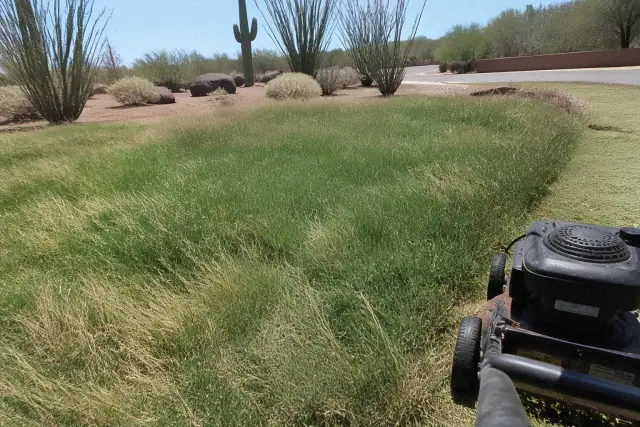
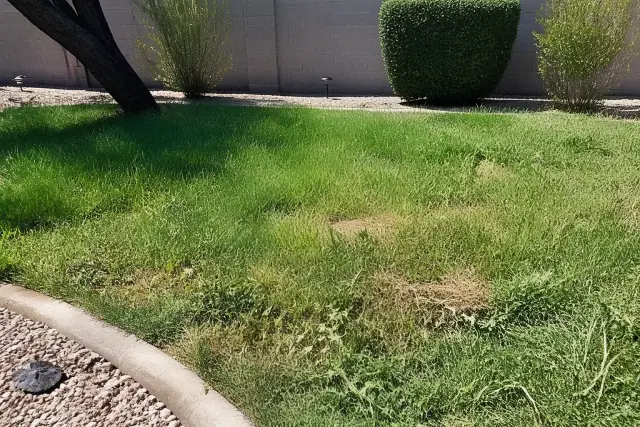
A commercial mower trimming an overgrown, patchy lawn in a residential yard in Phoenix, AZ.

Bermuda and hybrid Bermuda lawns are mowed at a height that protects the crown, with the blade raised during peak summer stress and adjusted for winter ryegrass overseed. Because Bermuda typically goes dormant from roughly November through March without overseeding, mowing, watering, and fertilization change with the season. We also watch for thatch, chinch bugs, Bermuda mites, and iron chlorosis.

Request Estimate

Weed Control

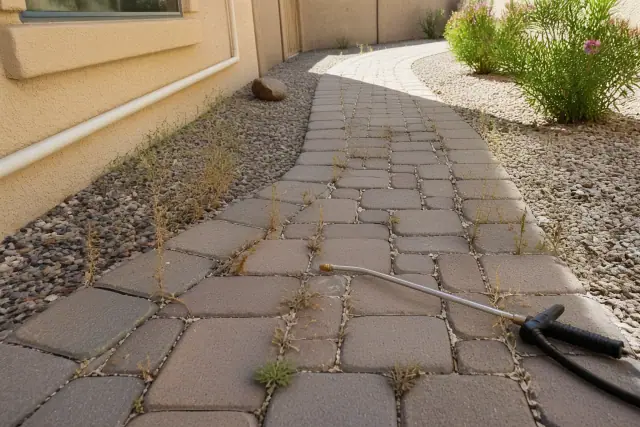
A sprayer wand treating wilted weeds between paved stones on a desert landscape in Phoenix, AZ.

Pre-emergent and post-emergent treatments are selected for winter weeds such as London rocket and annual bluegrass and summer weeds such as spurge and pigweed. Sensitive areas around pools, vegetable beds, pets, and drip emitters receive targeted treatment or hand-pulling, and approved non-synthetic options are available for clients seeking organic weed control.

Request Estimate

Tree Trimming

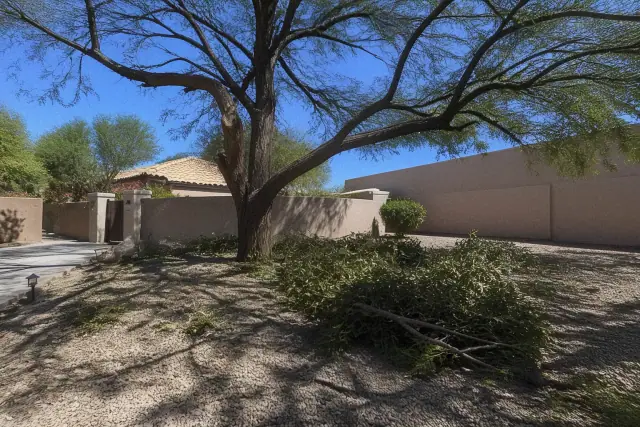
Tree trimming in progress with a pile of fresh branch clippings on desert gravel at a jobsite in Phoenix, AZ.

Tree trimming follows ANSI A300 pruning standards, with cuts made outside the branch collar instead of flush cutting or topping. Deadwood, co-dominant stems, and dense canopies are addressed to reduce monsoon wind resistance, while the schedule reflects the needs of ash, mulberry, palo verde, mesquite, ironwood, citrus, and other Valley trees.

Request Estimate

Shrub and Hedge Trimming

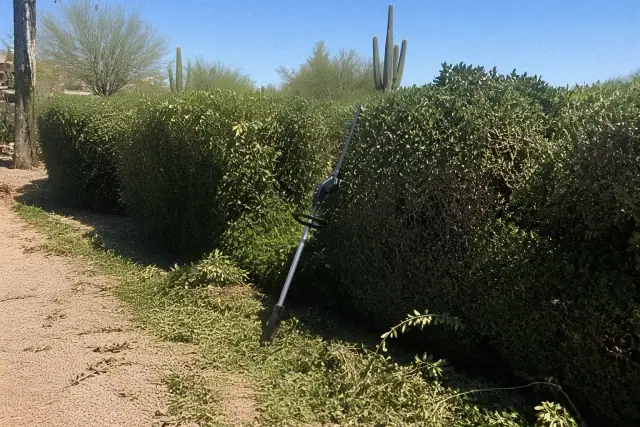
Untrimmed hedge with shears on desert gravel in front of a beige stucco wall at a residential property in Phoenix, AZ.

Shrubs and hedges are shaped without ignoring their natural growth habit or bloom cycle. Spring-flowering shrubs are pruned after flowering, while summer bloomers such as oleander are handled in late winter. Formal Xylosma or Indian hawthorn hedges may need shaping every four to six weeks during active growth, while brittlebush, red bird of paradise, and lantana respond to late-winter cutbacks.

Request Estimate

Desert, Rock, and Planting Care

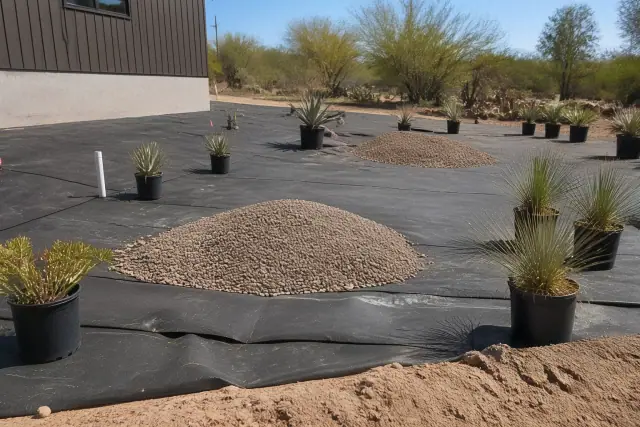
Decorative gravel and potted desert plants placed on weed barrier fabric at a Phoenix, AZ landscape jobsite.

Desert maintenance covers decomposed granite, river rock, rip-rap, planting beds, and drought-tolerant plant palettes. Texas sage, red yucca, desert marigold, agave, palo verde, and desert willow are cared for according to sun exposure, mature size, water needs, and applicable HOA plant guidelines. Shrub removal, stump grinding, and bed preparation are available when a plant has outgrown its space or declined beyond recovery.

Request Estimate

Irrigation Inspection and Repair

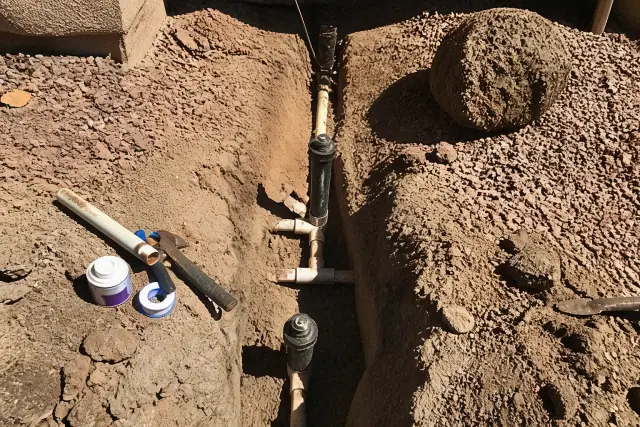
Excavated trench showing irrigation pipe repairs and hand tools in a residential yard in Phoenix, AZ.

Maintenance visits include checks of valves, drip emitters, lines, and controller programming. Repairs can address broken risers, failed valves, damaged lines, backflow preventer issues, runoff, and slope or foundation drainage concerns. Smart controllers, pressure-compensating emitters, and matched-precipitation nozzles help watering respond more closely to Phoenix conditions.

Request Estimate
Flexible Property Care

Maintenance Plans & Property Options

The right plan depends on turf coverage, desert plantings, irrigation complexity, property size, seasonal growth, and the level of reporting required. These options keep the visit schedule and work scope aligned with what is actually growing on the site.

Cut grass clippings and a string trimmer head on an overgrown lawn in Phoenix, AZ.

Weekly, Bi-Weekly, and Monthly Plans

Visit frequency is selected by plant density and growth rather than a one-size schedule. The plan can also shift across four distinct windows: spring green-up, summer peak growth, fall transition, and winter dormancy or overseed maintenance.

  • Weekly care for turf-heavy properties during peak growth
  • Bi-weekly care for mixed turf and desert landscapes
  • Monthly care for low-water xeriscape properties
  • Seasonal frequency changes for growth and dormancy
  • A defined scope for mowing, weeds, irrigation, and plant care
Request Estimate
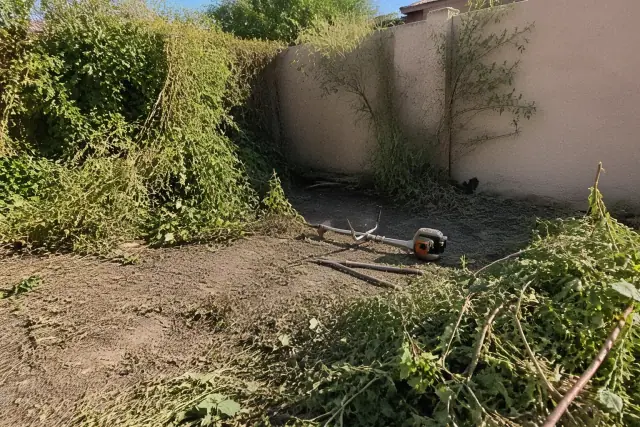
Professional residential landscape maintenance clearing overgrown weeds and foliage in a Phoenix, AZ yard.

Residential Landscape Maintenance

Residential plans balance curb appeal with the health of turf, trees, shrubs, desert plants, and irrigation. A mature Arcadia or Ahwatukee lawn receives a different routine from a north Phoenix xeriscape with native plantings and gravel.

  • Bermuda and overseeded ryegrass mowing
  • Foundation shrub and hedge shaping
  • Gravel-bed and planting-bed weed removal
  • Drip-zone and controller checks
  • Hard-surface blowing and green-waste cleanup
Request Estimate
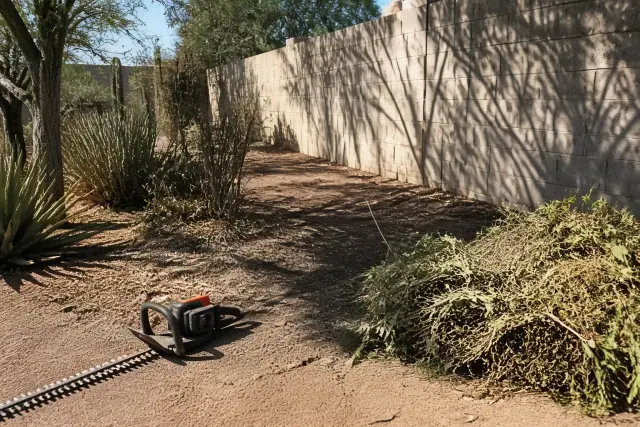
A hedge trimmer and a pile of garden debris during commercial landscape maintenance in Phoenix, AZ.

Commercial Landscape Maintenance

Commercial service is quoted by square footage, plant density, and site needs, with reporting that helps property managers track plant health and irrigation status. The difference between a 12,000-square-foot desert lot and an 8,000-square-foot grass property shows why labor cannot be estimated from lot size alone.

  • Plant-health observations for property managers
  • Irrigation-status reporting and deferred-work visibility
  • Schedules based on site growth and appearance needs
  • Care for turf, desert landscaping, or mixed sites
  • Individual scopes instead of flat-rate assumptions
Request Estimate
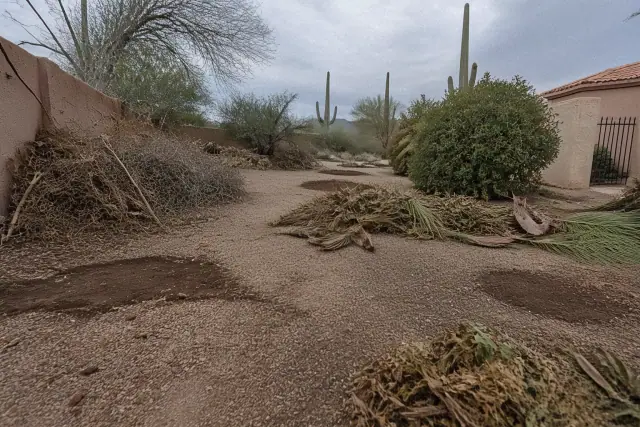
Piles of raked palm fronds and organic yard debris during landscape cleanup in Phoenix, AZ.

Seasonal Yard Cleanup

Seasonal cleanups carry a heavier scope than routine visits and can be scheduled as standalone work. Monsoon debris removal is especially common from June through September, when palm fronds, broken branches, and wind-blown material can accumulate quickly.

  • Winter weed removal during spring cleanup
  • Frost-damage pruning before summer heat
  • Fall leaf removal and winter overseed preparation
  • Palm frond, branch, and storm-debris removal
  • Green-waste hauling instead of curbside piles
Request Estimate
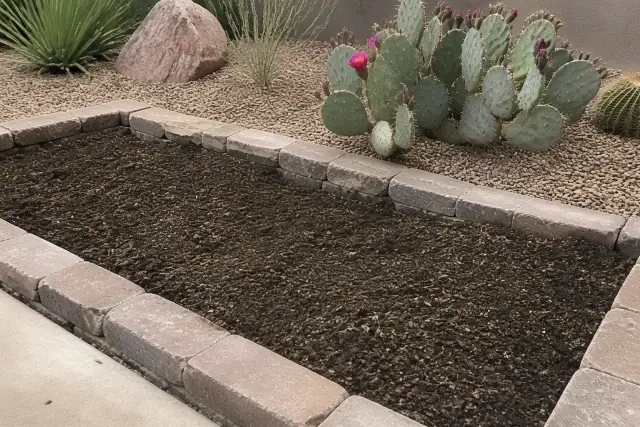
Stone-edged soil bed for water-efficient desert landscaping in Phoenix, AZ with cactus and granite mulch in the background.

Water-Efficient Desert Landscape Care

Xeriscape care groups plants into hydrozones so low-water cactus and agave beds do not share schedules with thirstier shrubs. The National Association of Realtors reports that professionally designed, water-efficient landscaping can increase property value by up to 20 percent, while reducing outdoor water demand compared with traditional turf.

  • Three-eighths-inch-minus decomposed granite for walkways
  • One-to-three-inch rock for drainage areas and dry creek beds
  • Compacted bases and landscape fabric to slow weeds
  • Plants grouped by sun exposure, mature size, and water need
  • Native and adapted plantings that need less supplemental water
Request Estimate
Finding Your Right Fit

Choosing the Right Maintenance Approach

A useful plan starts with the site's plant material, irrigation zones, soil restrictions, and appearance goals. Phoenix Expert Landscaping adjusts the scope for turf-heavy yards, low-water desert properties, mixed landscapes, and commercial sites instead of assigning the same visit to every customer.

Arizona Climate Planning

Maintenance timing follows Phoenix heat, dry-season demand, monsoon rainfall, seasonal turf growth, and local weed germination instead of a generic national calendar. That planning keeps mowing, watering, pruning, and pre-emergent work aligned with the Salt River Valley.

Species-Specific Plant Care

Pruning decisions account for branch collars, bloom cycles, desert heat stress, and each plant's natural form. Turf care also responds to Bermuda growth, overseed conditions, alkaline soil, compaction, and visible nutrient symptoms instead of relying on a generic fertilizer blend.

Licensed, Bonded & Insured

Phoenix Expert Landscaping operates as a licensed, bonded, and insured landscape company. That protection matters when a crew works on a property every week or every other week and when the scope includes irrigation or other work that may carry additional requirements.

What Sets Us Apart

Why Choose Us for Landscape Maintenance?

Value comes from a crew that shows up consistently, checks more than the mower path, and explains when a property needs a different service frequency. We scope the yard honestly so a low-water landscape is not paying for visits it does not need and a complex property is not left with irrigation or weed work deferred.

Request an Estimate

Heat and Caliche Stress

Low organic content, alkaline pH, poor drainage, and compacted caliche can restrict roots and contribute to yellowing or decline. Soil amendments, irrigation adjustments, and chelated iron for iron chlorosis are used when the observed condition supports them.

Clogged Emitters and Leaks

Hard-water mineral deposits can clog drip emitters, while rodents, shovels, failed valves, and broken risers can damage a system. A cracked mainline or stuck valve may waste hundreds of gallons before an early-morning watering cycle makes the problem obvious.

Twice-Yearly Weed Pressure

Phoenix weed pressure spikes twice each year. Pre-emergent is typically timed from late September through October for winter weeds and from February through March for summer weeds; by breaking the germination cycle, clients on maintenance plans can see pressure drop noticeably by the second season.

Monsoon Wind and Debris

Monsoon wind gusts regularly exceed 50 miles per hour, increasing the risk of limb failure in dense canopies and structurally weak trees. Removing deadwood and co-dominant stems and reducing wind resistance before storms helps lower that risk, while cleanup removes fallen branches and palm fronds afterward.

Damaging Pruning Practices

Tree topping and flush cuts create wounds that heal poorly and invite boring insects or fungal pathogens. Repeated over-shearing also stresses woody shrubs, reduces flowering on plants such as oleander and Texas sage, and can remove an entire season's flower buds when performed at the wrong time.

Mismatched Watering Zones

Putting cactus, agave, and thirstier shrubs on the same irrigation line forces some plants to receive the wrong amount of water. Fixed timers can compound the problem during rain or cooler weather, while runoff that pools near a foundation or erodes a slope signals a drainage issue that also needs correction.

How It Works

Our Landscape Maintenance Process

A recurring plan begins with the property itself, then follows a consistent visit routine with room for seasonal adjustments. The six steps below keep plant care, irrigation observations, cleanup, and client communication connected.

01.

Assess the Property

We review lot size, turf coverage, plant density, desert materials, irrigation zones, and problem areas. This separates immediate cleanup or repair needs from work that belongs in the recurring plan.

02.

Set the Scope and Frequency

The service list and visit cadence are matched to actual growth, property size, and whether the site is turf, desert landscaping, or mixed. Commercial plans also define the plant-health and irrigation reporting a property manager needs.

03.

Complete Routine Landscape Care

The crew mows and edges turf, blows hard surfaces, removes weeds, and performs light seasonal plant care. Mowing height, pruning cuts, and treatment methods are adjusted to the plant and site conditions.

04.

Check Irrigation Zones

Valves, emitters, visible lines, and controller programming are checked for leaks, clogs, damage, and mismatched schedules. Repair recommendations address the observed issue, including backflow or drainage concerns when they are part of the scope.

05.

Adjust for the Season

Watering, mowing, fertilization, pre-emergent treatment, pruning, and cleanup shift with active growth, dormancy, monsoon weather, and bloom cycles. The plan changes when the landscape changes instead of repeating an unsuitable routine.

06.

Clean Up and Report Concerns

Green waste and debris are removed, and hard surfaces are left clean. Any developing plant-health, irrigation, drainage, or storm-damage concern is identified so the next action is clear; commercial clients receive the agreed reporting for their records.

Plan Better Property Care

Request a Landscape Maintenance Estimate

Tell Phoenix Expert Landscaping about your turf, desert plantings, irrigation, and preferred visit frequency. We will scope the property and recommend a maintenance plan based on its actual needs.

Landscape Maintenance Help

Phoenix Landscape Maintenance FAQs

These answers cover recurring landscape care, pricing, licensing, seasonal timing, weed control, irrigation, and plan selection for Phoenix properties.

Call Our Team

A standard visit includes mowing and edging turf, blowing hard surfaces, removing weeds from beds and gravel, checking irrigation, and providing seasonal plant care such as light pruning and fertilization. The exact scope is tailored to turf-heavy, desert, or mixed landscapes, and commercial plans may include plant-health and irrigation reporting.

Common mistakes include overwatering desert-adapted plants, topping trees, pruning shrubs at the wrong point in their bloom cycle, and skipping pre-emergent weed control. Mixing high-water and low-water plants on one irrigation zone can also stress plants and shorten their useful life.

General landscaping labor in Phoenix typically runs $45 to $85 per hour, so $100 per hour is at the higher end but may be reasonable for specialized tree trimming, irrigation diagnostics, or licensed trade work. For recurring maintenance, a clear per-visit or monthly scope is often more useful than comparing hourly rates alone.

Basic mowing, trimming, yard cleanup, and landscape maintenance do not require a specific Arizona state contractor license. Irrigation installation, backflow work, retaining walls, and other trade or structural scopes may fall under Arizona Registrar of Contractors requirements depending on the work and dollar value. Phoenix Expert Landscaping operates as a licensed, bonded, and insured company.

Bi-weekly service typically runs $85 to $95 per visit, and an average-sized residential lot may be around $110 per month; the broader monthly range is commonly $110 to $192 depending on size and plant density. Larger or more complex monthly packages commonly range from $150 to $400 or more. Standalone yard cleanup typically costs $36 to $107 depending on lot size and debris volume.

Ash and mulberry are best pruned during late-winter dormancy, while palo verde, mesquite, and ironwood tolerate trimming through much of the year but should avoid heavy cuts during peak summer heat. Citrus generally needs only minimal structural pruning. For monsoon preparation, structural trimming should generally be completed by late May.

Pre-emergent creates a soil barrier that prevents weed seeds from germinating, so it must be applied before the expected growth window. Post-emergent is applied to weeds that have already sprouted. A complete program combines both approaches with hand removal in beds or around emitters where spray drift could harm desired plants.

Weekly service fits turf-heavy properties during peak growth, while bi-weekly care often suits mixed turf and desert yards. Monthly service is better suited to low-water xeriscape properties where weeds, irrigation checks, and periodic shrub care matter more than frequent mowing. The final schedule should reflect plant density and seasonal growth.

Desert landscapes still need weed prevention, drip-emitter checks, seasonal shrub trimming, debris removal, and attention to rock or gravel coverage. Native and adapted plants should be grouped by water need and pruned according to species rather than sheared on a generic schedule.

Yes. Approved non-synthetic products are available for clients who want to limit chemical use around children or animals. Hand-pulling is also used in planting beds and around drip emitters where spray drift could damage desired plants.

Commercial maintenance can include the same mowing, trimming, weed control, cleanup, and irrigation checks used on residential properties. Plans also add agreed reporting on plant health and irrigation status so property managers can track deferred work. Pricing is quoted individually by square footage and plant density.

Proper structural pruning removes deadwood and co-dominant stems and thins overly dense canopies before storm season. This reduces wind resistance without topping the tree or making flush cuts. After a storm, cleanup removes broken branches, palm fronds, and wind-blown debris.

Weather-based smart controllers can adjust schedules for monsoon rainfall or cooler weather, while pressure-compensating emitters and matched-precipitation nozzles address uneven flow. On most residential properties, these upgrades can pay for themselves through lower Salt River Project or City of Phoenix water bills within a season or two.