Proudly serving Phoenix, Scottsdale, Mesa, Tempe, Chandler, Gilbert & surrounding areasCall or Text 24/7: 602-449-0493
Aerial drone view of a suburban neighborhood with terra-cotta roofs and desert landscaping in Phoenix, AZ.

Landscape Maintenance, Irrigation Repair, and Desert Property Care in Cave Creek, AZ

Phoenix Expert Landscaping provides landscape maintenance for homes and businesses throughout Cave Creek, Arizona. Our crews handle yard cleanup, lawn care, weed control, tree trimming, shrub and hedge trimming, planting, desert landscaping, rock and gravel work, and irrigation repair. We build each service plan around the property's turf, plantings, hardscape, and irrigation rather than forcing every yard into the same routine. Licensed and insured service gives local owners one team for recurring care and targeted repairs.

Caliche soil, granite outcroppings, elevation changes, and triple-digit summer heat all affect how Cave Creek landscapes drain and grow. Hillside properties near Black Mountain can behave differently from established yards along Cave Creek Road or desert-adapted communities nearby. We begin by checking turf, plant health, irrigation function, and drainage patterns, then recommend a schedule suited to the property. That local assessment helps protect mature plants, reduce avoidable water waste, and catch small problems before desert heat magnifies them.

Our service area includes Cave Creek, Carefree, Desert Hills, north Scottsdale, and the surrounding North Phoenix corridor within Maricopa County.

★ ★ ★ ★ ★4.9/5 Average Rating - 20+ Years of Experience - Cave Creek Landscaping Company Specialists - Residential & Commercial
Landscape Services

Landscape Services in Cave Creek, AZ

Our residential and commercial services cover living landscape elements, irrigation, and the rock or hardscape beds around them. For property owners planning work in another Valley community, our Goodyear, AZ page provides details for that location.

Landscape Maintenance

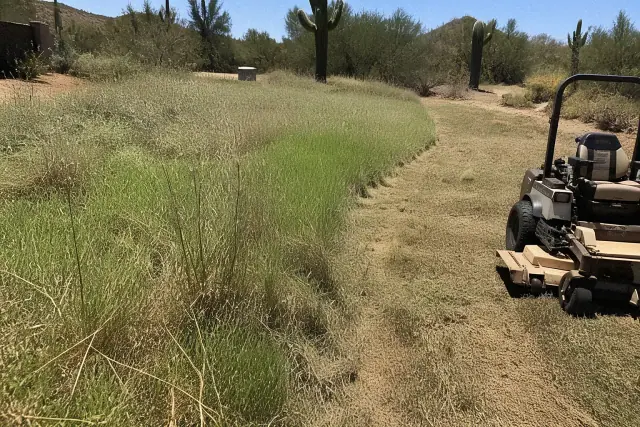
Neglected lawn with uneven grass and weeds in Cave Creek, AZ, with desert scrub and afternoon shadows in the background.

Regular visits can include mowing and edging where applicable, weed control, debris removal, and a quick irrigation check. We adjust mowing height, fertilization, trimming, and cleanup timing through Cave Creek's two growing seasons and monsoon period so maintenance matches current conditions.

Explore Service

Yard Cleanup

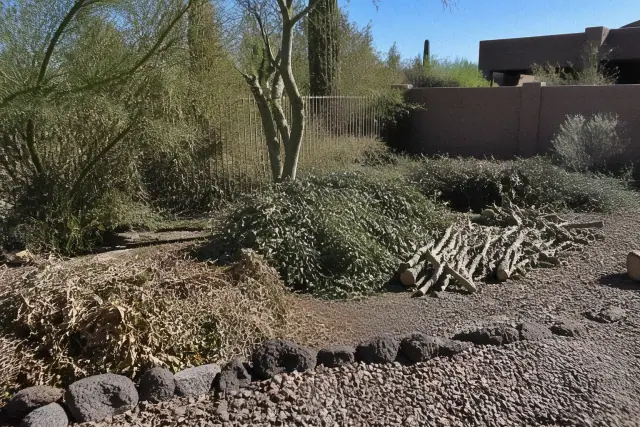
Piles of yard waste and cleared brush from an active cleanup project in Cave Creek, AZ.

Seasonal cleanup removes palm fronds, mesquite leaf litter, green waste, and debris or displaced rock after monsoon winds. Pre-season visits ahead of summer heat and winter overseeding also clear debris piles where scorpions and rodents commonly shelter.

Explore Service

Lawn Care

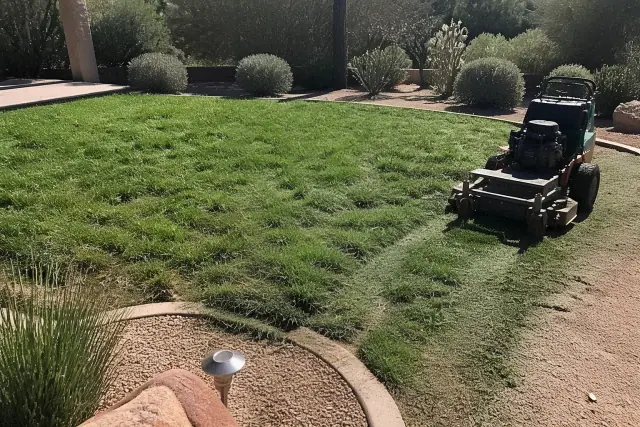
A landscaping technician mows a patchy lawn with weeds and thatch in Cave Creek, AZ, under bright desert sunlight.

We mow, edge, fertilize, and aerate Bermuda and overseeded ryegrass on a schedule suited to two growing seasons. Raising blade height in summer helps protect roots from heat stress, while soil-testing recommendations address alkaline, caliche-heavy ground.

Explore Service

Weed Control

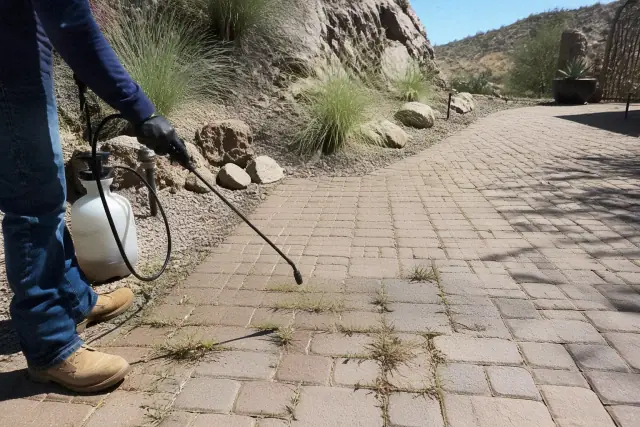
Technician applying weed control to cracks in a paved path in Cave Creek, AZ with Sonoran desert landscape.

Pre-emergent treatments are timed for spring and fall, with targeted post-emergent work when puncturevine or Bermuda grass moves into rock beds after July and August moisture. Applications follow Arizona Department of Agriculture label requirements around plants, pets, and pollinators.

Tree Trimming

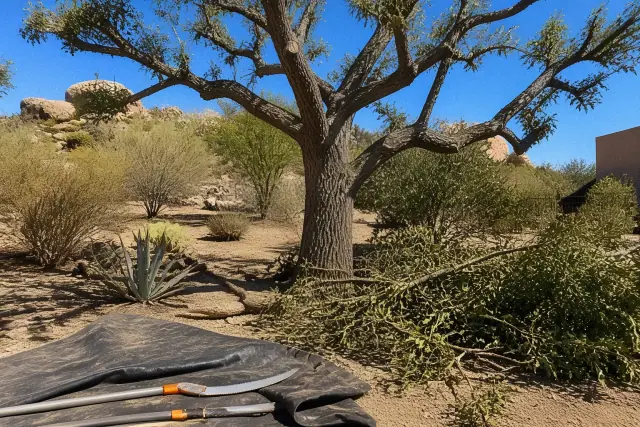
Pruning saws and branch clippings at the base of a mature tree in the Sonoran Desert landscape of Cave Creek, AZ.

Mesquite, palo verde, and ironwood each need pruning suited to their growth habits. We remove deadwood and crossing limbs for structure and clearance before monsoon winds expose weak branches, and time major pruning outside bird nesting season in line with Arizona Game and Fish Department guidance.

Shrub & Hedge Trimming

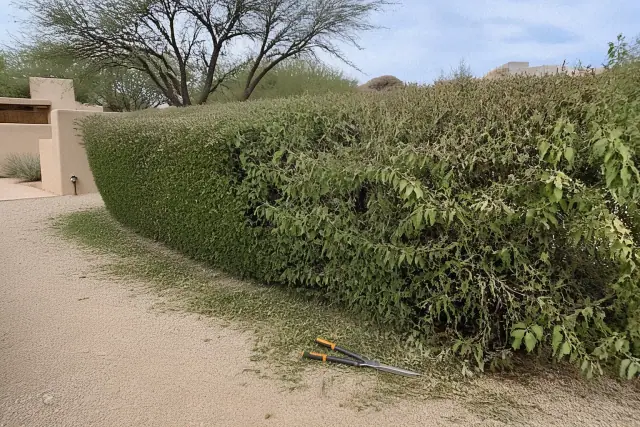
Professional hedge shears resting against a partially trimmed shrub row in Cave Creek, AZ.

Oleander, Texas sage, and bougainvillea may need selective hand-pruning rather than uniform shearing to avoid stress and heat scald. A planned trimming cycle keeps growth dense while reducing overgrowth near windows and walkways that can add fire fuel near open desert.

Planting Services

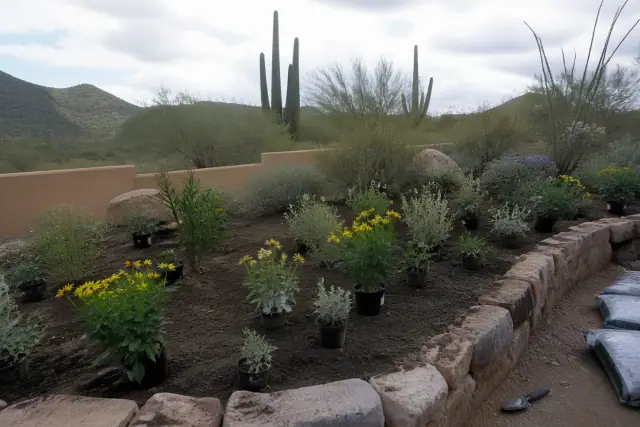
Newly planted flowers in a stone-edged garden bed in Cave Creek, AZ with desert landscape in the background.

We install Sunset zone 13 plant material such as agave, brittlebush, desert marigold, accent palms, and ornamental cacti. Proper caliche backfill amendment, a temporary drip tie-in, and mature-spread planning help plants establish without crowding the bed and demanding aggressive retrimming again in two years.

Desert Landscaping

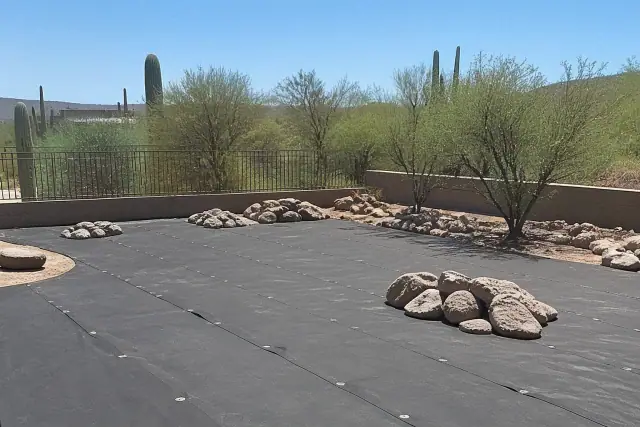
Weed barrier fabric installation for a desert landscaping project in Cave Creek, AZ with boulders and cacti.

Xeriscape layouts combine native and adapted plants with decomposed granite, boulders, and dry creek beds that move monsoon runoff. Grading beds away from foundations and reducing turf can substantially lower irrigation demand under regional water restrictions administered through the Arizona Department of Water Resources.

Rock & Gravel Landscaping

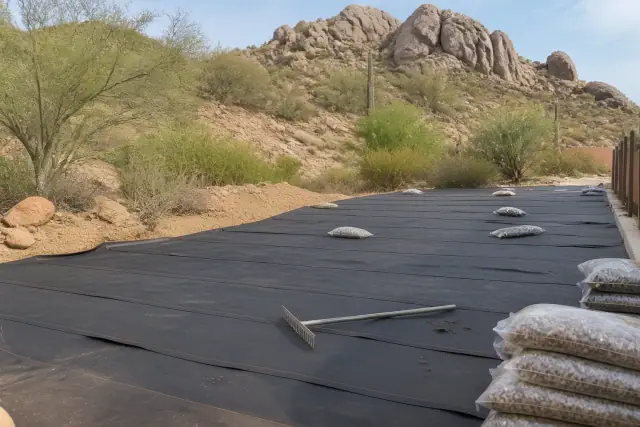
Weed barrier fabric laid out with bags of stone and a metal rake at a jobsite in Cave Creek, AZ.

Depending on the application, Cave Creek rock beds may use 3/8-inch minus granite or larger decorative rock for weed suppression and heat management. We pair landscape-rated barrier fabric with grading that sheds water away from structures, then provide refresh or top-dressing work as sun exposure fades the surface.

Irrigation Repair

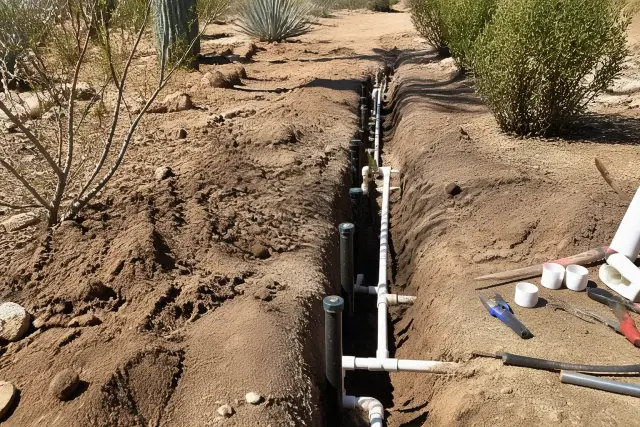
Irrigation repair trench with exposed PVC pipes and sprinkler heads in Cave Creek, AZ.

We diagnose broken mainlines, faulty valves, controller programming, clogged lines, and drip-zone spacing. Because one blown emitter can kill an established shrub within days of summer heat, seasonal checks and prompt repairs are among the most cost-effective ways to prevent plant loss.

Service Planning

Choosing Landscape Maintenance for Cave Creek Properties

The right plan depends on lot size, turf coverage, tree canopy, irrigation complexity, visibility, and the amount of desert-adapted planting. A clear walkthrough and written scope make it easier to choose the services and frequency the property actually needs.

Property-Specific Maintenance Plans

A half-acre turf lot with mature canopy requires more labor and equipment time than a similarly sized desert lot with drip irrigation and rock beds. The plan should reflect the property's surfaces, plant palette, drainage, and actual workload.

Flexible Service Scheduling

High-visibility commercial sites may need weekly landscape maintenance, while a lower-maintenance desert yard may be well served by monthly visits. Seasonal adjustments should still account for summer stress, winter overseeding, and monsoon cleanup.

Licensed and Insured Service

Phoenix Expert Landscaping operates as a licensed landscape contractor and carries general liability insurance. That contractor-grade foundation matters when crews work around irrigation, mature trees, buildings, vehicles, and other property assets.

Arizona Horticultural Knowledge

Crews trained in Arizona-specific horticultural practices understand native-tree pruning, desert plant stress, and herbicide label compliance. That knowledge helps avoid generic methods that can damage palo verde branches, exposed shrubs, or heat-stressed turf.

Clear Written Estimates

A written, itemized estimate should show what is included before work begins. If the walkthrough uncovers a cracked mainline or storm-damaged tree outside routine maintenance, we document it and request approval before adding repair work to the invoice.

Irrigation Checks During Visits

Routine visits include a quick look for broken emitters and clogged lines before they cause visible decline. This small preventive step is especially valuable where Cave Creek heat and hard water shorten the useful life of irrigation parts.

Cave Creek Landscape Issues

Common Landscape Problems on Cave Creek Properties

Cave Creek's roughly 4,892 residents care for properties ranging from half-acre desert lots to larger equestrian parcels, yet the same six conditions repeatedly drive maintenance needs. Soil, heat, storm runoff, irrigation failures, weeds, and unmanaged growth can compound quickly when they are handled in isolation.

Request Landscape Assessment

Caliche Soil and Poor Drainage

Compacted calcium-carbonate caliche resists water penetration and root expansion unless planting areas are broken up and amended. Transplanted lawns and non-native shrubs can fail within a year or two when water runs off the surface instead of reaching prepared soil.

Extreme Heat Stress

At roughly 2,000 feet in elevation, Cave Creek still sees summer daytime highs that regularly reach 108 to 112 degrees Fahrenheit. Rock and hardscape surface temperatures can exceed 150 degrees Fahrenheit, stressing turf roots, plants, and irrigation tubing at the same time.

Monsoon Wind and Runoff

Monsoon season typically runs from July through September, bringing intense rain that can deliver significant volume in under an hour. Poor grading washes decomposed granite toward pools and driveways, while wind gusts expose weak tree structure and contribute to storm failures.

Drip Irrigation Failures

Broken mainlines, failed valves, clogged emitters, and controller errors can deprive several plants before the problem is obvious. Seasonal system checks are particularly important because heat and local water hardness put extra stress on drip components.

Fast-Growing Desert Weeds

Puncturevine and Bermuda grass can spread rapidly through rock beds once monsoon moisture arrives in July and August. Timed pre-emergent treatment and careful spot control reduce the need for repeated broad applications later.

Overgrowth and Debris Buildup

Dense hedges near windows and walkways can expose inner branches to heat scald when cut incorrectly and can add fire fuel near wildland areas. Palm fronds, mesquite litter, and storm debris also create shelter for scorpions and rodents when cleanup is deferred.

Why Choose Us

Why Choose Phoenix Expert Landscaping in Cave Creek, AZ

Reliable landscaping here takes more than a mowing route. Phoenix Expert Landscaping combines local terrain knowledge, consistent scheduling, documented communication, and full-service care for plants, turf, irrigation, and rock landscapes.

Cave Creek Terrain Experience

Our crews have worked on hillside properties near Black Mountain, wash-adjacent lots, and communities such as Tatum Ranch and Rancho Manana. That experience helps us account for Maricopa County Flood Control District wash easements, HOA plant palettes, rock-color standards, slope, and erosion exposure.

Proactive Photo Documentation

We document maintenance visits and photograph plant, irrigation, or storm issues that fall outside the routine scope. Clear communication and an estimate before extra work keep property owners informed and prevent surprise additions.

Residential and Commercial Capability

Residential properties receive the same contractor-grade process used for HOAs, retail centers, and office parks. We scale the work from a quarter-acre home site to a multi-acre commercial property while keeping irrigation checks, appearance, and site-specific requirements in view.

Simple Process

Our Landscape Maintenance Process in Cave Creek, AZ

Every new client starts with a property walkthrough, followed by a maintenance recommendation and written scope. Visits then follow a consistent schedule with seasonal adjustments, quick irrigation checks, and approval before work outside the plan.

01.

Walk Through the Property

We inspect turf condition, irrigation function, plant health, drainage patterns, rock beds, and access. This establishes the property's immediate problems and ongoing maintenance needs.

02.

Set the Scope and Schedule

We recommend weekly, monthly, or otherwise appropriate service based on visibility, lot size, turf, canopy, and desert plantings. The plan separates recurring care from repairs or larger improvement work.

03.

Review a Written Estimate

The estimate explains the tasks and frequency included in the proposed plan. Work begins only after the scope is clear, and additional repairs require approval before they reach the invoice.

04.

Complete the Scheduled Visit

A standard visit can include mowing and edging, weed control, debris removal, trimming scheduled for that cycle, and an irrigation check. Crews bring the routine tools and parts needed to keep the visit efficient.

05.

Adjust for the Season

Mowing height and fertilization shift for summer stress, while tree and shrub work is planned outside extreme heat windows. Monsoon activity and winter overseeding also change cleanup and turf priorities.

06.

Document Issues and Approve Repairs

When we find a cracked mainline, damaged tree, or another issue outside routine maintenance, we photograph it and provide a straightforward estimate. With approval, crews can handle most irrigation repairs during the same visit.

Maintenance Outcomes

Landscape Outcomes for Cave Creek Homes & Businesses

Case Study 1: Desert-adapted yards: Xeriscape planting, functional drip zones, and beds graded away from foundations can reduce irrigation demand while handling monsoon runoff more effectively.

Case Study 2: Turf properties: Seasonally adjusted mowing, fertilization, aeration, and irrigation checks support Bermuda and overseeded ryegrass through two different growing cycles.

Case Study 3: Commercial and HOA sites: Consistent visits help retail centers, office parks, and shared communities maintain appearance while tracking water-use, irrigation, and defensible-space requirements.

Request an Estimate

Plan Your Cave Creek
Landscape
Service

Tell us about your Cave Creek property, current landscape concerns, and preferred maintenance schedule. We will walk the site, define the scope, and provide a written estimate before work begins.

Local Landscaping Help

Landscape Maintenance FAQs for Cave Creek, AZ

These answers cover common questions about Cave Creek maintenance plans, desert conditions, service timing, and pricing. A property walkthrough is still the best way to define the right scope.

Call Our Landscaping Team

A full plan can include mowing, edging, fertilization, weed control, shrub and hedge trimming, tree pruning, debris cleanup, and seasonal adjustments. Phoenix Expert Landscaping also checks irrigation during routine visits because clogged lines and broken emitters are common causes of plant loss in Cave Creek. The exact scope depends on the property's turf, desert beds, trees, and irrigation.

Pricing depends on property size, visit frequency, turf coverage, canopy, irrigation complexity, and included services. Basic mowing commonly falls between $50 and $250 per visit, while broader Arizona maintenance benchmarks run from $100 to $500 per visit; many residential plans average around $300 per month, or roughly $3,600 annually. We price each Cave Creek property after a walkthrough and provide a written scope.

Project cost varies much more than recurring maintenance because materials, grading, irrigation, plant quantities, and lot size change the workload. A standard residential landscaping project averages around $3,516, while complex or multi-acre designs can exceed $14,800, and broader industry labor benchmarks are near $80 per hour. A site-specific written estimate is the only reliable way to price the actual work.

Frequency depends on the property's visibility, plant material, turf, and season. A high-visibility commercial property may need weekly maintenance, while a lower-maintenance desert yard may need monthly visits. Summer growth, monsoon debris, and winter overseeding can change the schedule.

Cave Creek turf needs mowing, edging, fertilization, and aeration timed to two growing seasons. Raising the mowing height in summer helps protect Bermuda roots from heat stress, while overseeded ryegrass follows its own cooler-season schedule. Soil-testing recommendations can also clarify what alkaline, caliche-heavy soil needs.

Pre-emergent treatment is generally timed for spring and fall growing windows, with targeted post-emergent treatment where weeds break through. Puncturevine and Bermuda grass can move quickly into rock beds after July and August monsoon moisture. Applications should follow product labels and Arizona Department of Agriculture requirements.

Structural pruning should remove deadwood and crossing limbs before monsoon winds exploit weak branches. Major work is also timed outside bird nesting season in accordance with Arizona Game and Fish Department guidance. The exact schedule depends on species, structure, clearance, and current damage.

It depends on the plant. Oleander, Texas sage, and bougainvillea often benefit from selective pruning that preserves healthy structure instead of exposing interior branches to heat scald. The goal is controlled density and clearance without forcing every shrub into the same shape.

Sunset zone 13 plantings need careful selection, caliche backfill amendment, and dependable temporary drip coverage. Agave, brittlebush, desert marigold, ornamental cacti, and other adapted plants should also be spaced for their mature spread. Those steps reduce transplant shock and unnecessary corrective trimming.

Xeriscape can pair adapted plants with decomposed granite, boulders, and dry creek beds that guide short, intense storm flows. Beds should be graded away from foundations so runoff does not pool against structures or wash rock into pools and driveways. The same design can reduce irrigation demand compared with turf-heavy landscaping.

The application determines whether 3/8-inch minus granite or a larger decorative rock is appropriate. Landscape-rated weed barrier and correct grading matter as much as rock size because lightweight fabric can tear and flat beds can hold water near structures. Sun-faded beds can later be refreshed with top-dressing.

We diagnose broken mainlines, faulty valves, controller programming problems, clogged lines, failed emitters, and drip-zone spacing. A blown emitter can damage an established shrub within days during summer heat, so seasonal checks are valuable. Most irrigation repairs can be completed during the same visit after approval.

Cleanup can include palm fronds, mesquite leaf litter, green waste, storm debris, and rock displaced by monsoon runoff. Visits can be timed before summer heat, before winter overseeding, or after wind events. Removing debris also reduces common shelter for scorpions and rodents.

Service covers Cave Creek, Carefree, Desert Hills, north Scottsdale, and the surrounding North Phoenix corridor within Maricopa County. Within Cave Creek, crews work along Cave Creek Road and in areas such as Tatum Ranch, Rancho Manana, Black Mountain hillside properties, and wash-adjacent lots.

We assess turf condition, irrigation function, plant health, drainage, rock beds, and the property's maintenance priorities. Then we recommend a schedule and define the recurring scope in a written estimate. Repairs or additional work are documented and require approval before being added.