Proudly serving Phoenix, Scottsdale, Mesa, Tempe, Chandler, Gilbert & surrounding areasCall or Text 24/7: 602-449-0493
Aerial drone view of a suburban neighborhood with terra-cotta roofs and desert landscaping in Phoenix, AZ.

Desert Landscaping: Xeriscape Design and Low-Water Property Transformations in Phoenix, AZ

Phoenix Expert Landscaping provides desert landscaping in Phoenix, including xeriscape design, low-water planting, rock and gravel installation, and irrigation repair. Our crews also handle landscape maintenance, yard cleanup, lawn care, weed control, tree trimming, shrub and hedge trimming, and planting services. We build each project around Sonoran Desert conditions instead of forcing cool-climate materials into an arid yard. The result is a landscape planned for the way Valley homeowners use and maintain their outdoor space.

Phoenix properties contend with caliche-laden, alkaline soil, around eight inches of rain a year, and more than 100 days above 100 degrees. Turf, mismatched shrubs, and overspraying sprinkler heads can waste water while still leaving plants stressed. We plan drip zones by water need, amend compacted planting areas, and grade yards toward approved discharge points. A free landscape estimate begins with a walk through your property, budget, HOA requirements, and intended use.

Our desert installations can combine Arizona-adapted plants, decomposed granite, landscape rock, flagstone, accent boulders, and efficient drip irrigation. Crews include ISA-certified arborists for tree work and technicians familiar with Arizona Registrar of Contractors requirements. We also use 3D landscape design tools during consultations so you can review bed shapes, patio placement, and boulder locations before installation begins.

Phoenix Expert Landscaping provides desert landscaping throughout Phoenix and nearby Scottsdale, Tempe, Mesa, Glendale, Chandler, and the greater Maricopa County metro area.

★ ★ ★ ★ ★4.9/5 Average Rating · 20+ Years of Experience · Thousands of Customers Helped · Licensed & Insured · Residential & Commercial

Desert Landscaping Options & Benefits

What Is Desert Landscaping?

Desert landscaping, often called xeriscaping, replaces thirsty turf and poorly adapted ornamentals with low-water plants, decomposed granite or gravel groundcover, and hardscape suited to arid conditions. It is a complete approach to plant selection, irrigation, soil, drainage, mulch, and ongoing care.

The City of Phoenix Water Services Department promotes water-wise landscaping because conventional lawns require heavy irrigation in this climate. A well-planned desert yard groups plants by water need and uses drip irrigation at root zones instead of broad spray coverage over pavement and empty ground.

Desert landscaping also creates a more durable, intentional outdoor space when materials and mature plant sizes are considered from the start. Homes with mature desert landscaping sell roughly 18 days faster than comparable properties with traditional turf-heavy yards, reflecting the value many local buyers place on established water-wise design.

Benefits of Desert Landscaping

A properly designed xeriscape can conserve water, reduce turf-dependent work, and help a yard withstand Phoenix heat without giving up color, shade, or usable space. The strongest results come from combining efficient irrigation with climate-appropriate plants, prepared soil, and correctly installed groundcover.

  • Outdoor water use may drop by up to 50 percent with appropriate plants and efficient irrigation.
  • Recorded savings average around 50 gallons of water per square foot converted.
  • Water-use zones keep drought-tolerant plants from being overwatered for thirstier neighbors.
  • Decomposed granite and gravel reduce turf upkeep while supporting drainage.
  • Proper plant spacing limits repeated trimming as shrubs reach mature size.
  • Ground covers shade bare soil and help reduce weed pressure.
  • Thoughtful grading directs fast monsoon runoff away from structures.
  • Plants, stone, and hardscape can create intentional year-round curb appeal.
Phoenix Desert Landscaping

Desert Landscaping Services

We plan desert landscapes as connected systems rather than isolated plant or rock installations. Design, irrigation, soil preparation, drainage, materials, and maintenance are coordinated so the finished yard fits its site and remains practical to care for.

Xeriscape Landscape Design

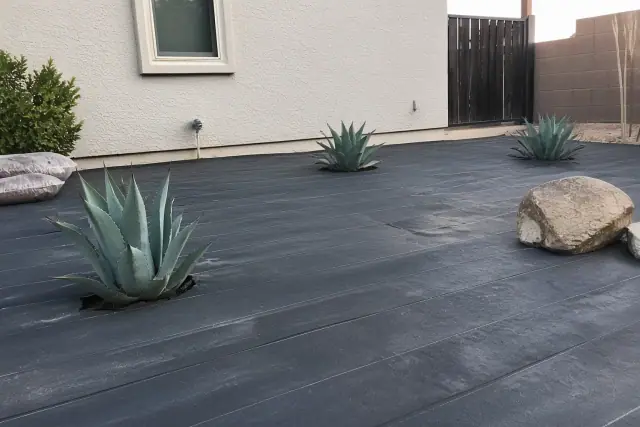
Xeriscape landscape design installation with agave plants and crushed granite on a jobsite in Phoenix, AZ.

Our designs apply the seven xeriscaping principles: planning and design, soil analysis, practical turf areas, appropriate plant selection, efficient irrigation, mulch use, and appropriate maintenance. The same framework supports residential and commercial work, from compact courtyards to multi-acre sites near Sun Corridor business parks.

Request Estimate

Low-Water Desert Planting

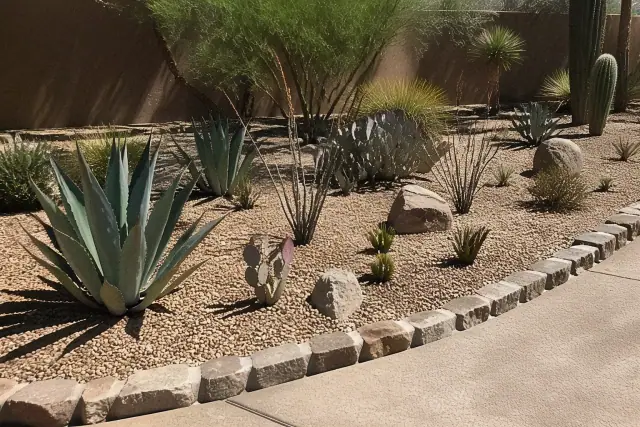
Freshly planted agave and prickly pear with crushed granite landscaping in Phoenix, AZ.

We select plants by mature size, water need, sun exposure, and performance in the Salt River Valley. Palo verde, ironwood, mesquite, and saguaro are adapted to afternoons that can reach 115 degrees, while shrubs such as Texas sage, brittlebush, and Baja fairy duster can establish without supplemental irrigation after one to two growing seasons.

Request Estimate

Rock and Gravel Installation

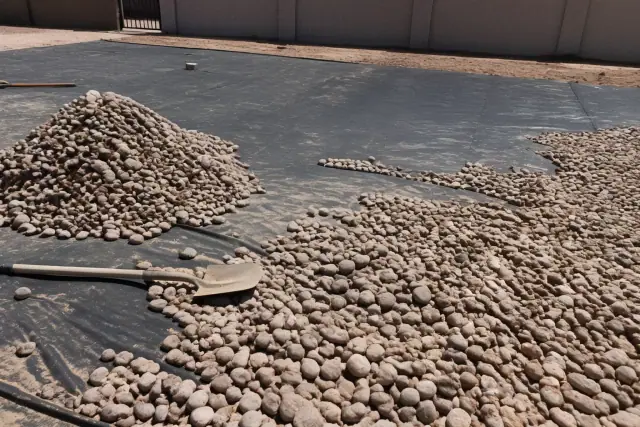
A flat shovel spreading decorative river rock over a weed barrier at a desert landscape jobsite in Phoenix, AZ.

We install decomposed granite, pea gravel, and larger landscape rock in sizes and earth tones suited to the home and any HOA material list. Weed barrier, proper stone depth, and grading go in before the rock so the groundcover suppresses weeds, manages runoff, and wears evenly.

Request Estimate

Drip Irrigation Conversion and Repair

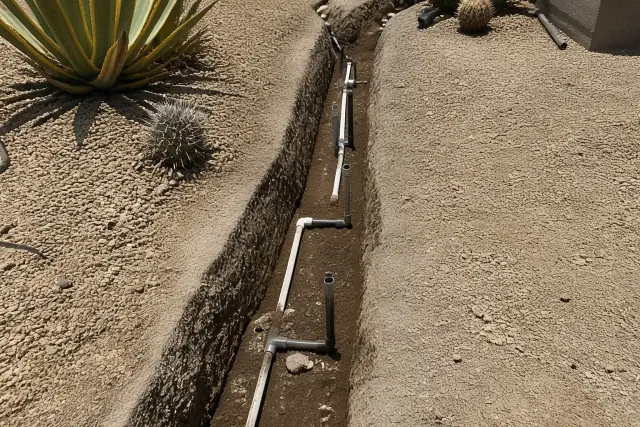
Exposed trench showing pipe segments and sprinkler heads during a drip irrigation repair in Phoenix, AZ.

Turf spray zones rarely match the needs of a desert planting bed. We replace turf spray irrigation with drip irrigation, group zones by water demand, place emitters near root zones, repair clogged emitters and line breaks, and adjust controller run times seasonally using Arizona Department of Water Resources conservation guidance.

Request Estimate

Soil Preparation, Grading and Drainage

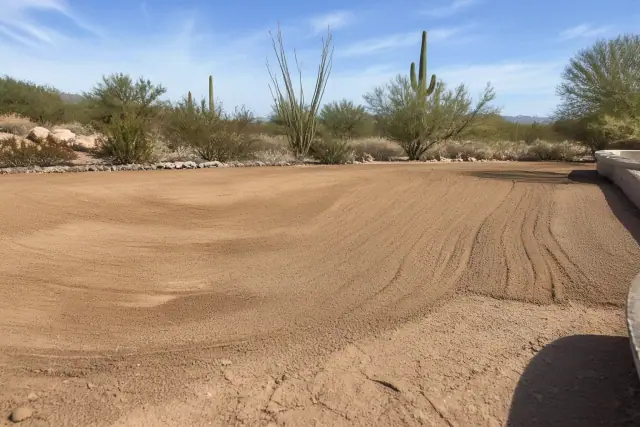
Graded dirt soil prepared for landscaping with visible drainage slopes and desert cacti in the background in Phoenix, AZ.

Compacted caliche can block roots and trap water around new plants. We test drainage, break up and amend planting zones with organic matter, use appropriate backfill around root balls, and grade the site away from structures toward approved discharge points consistent with Maricopa County floodplain management practices.

Request Estimate

Desert Landscape Maintenance

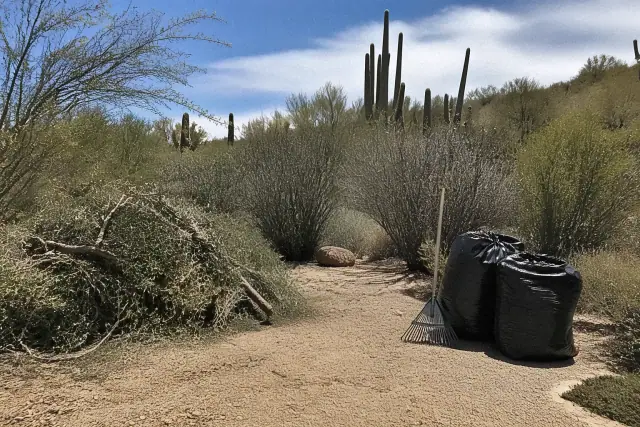
A partially cleared desert landscape with pruned foliage and tools on the ground in Phoenix, AZ.

Maintenance visits can include tree, shrub, hedge, palm, and cactus trimming; weed control; irrigation checks; debris removal; and rock top-dressing. Basic tree trimming typically runs between $200 and $250 per visit and is often performed about twice a year on standard-size residential trees, while drip systems should be checked at least seasonally.

Request Estimate
Water-Wise Design Choices

Desert Landscape Design Options

A desert yard can be spare and architectural, colorful and layered, or organized around an outdoor entertaining area. We combine plant palettes, groundcover, hardscape, irrigation, and maintenance priorities according to how the property looks, drains, and functions.

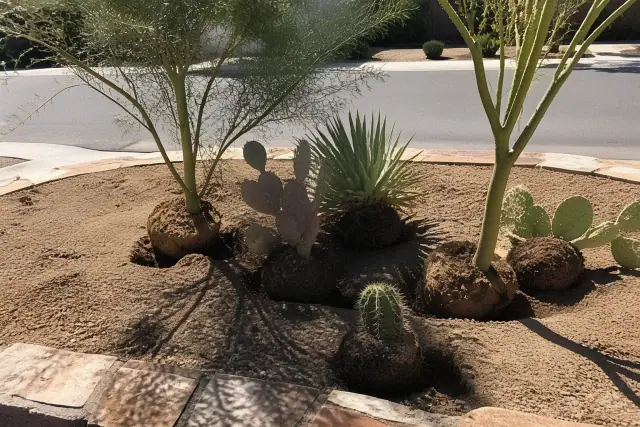
Newly planted native trees and cacti with fresh mulch in a desert garden bed in Phoenix, AZ.

Native Trees and Cacti

Trees and cacti adapted to the Sonoran Desert provide structure without the irrigation demand of cool-climate ornamentals. Placement accounts for mature canopy or plant size, nearby structures, and the amount of afternoon heat reflected by walls and paving.

  • Palo verde for light canopy and a distinctly desert form
  • Ironwood for a durable native shade-tree option
  • Mesquite placed with mature spread and roots in mind
  • Saguaro as a structural desert focal point
  • Flowering ocotillo for height and seasonal color
Request Estimate
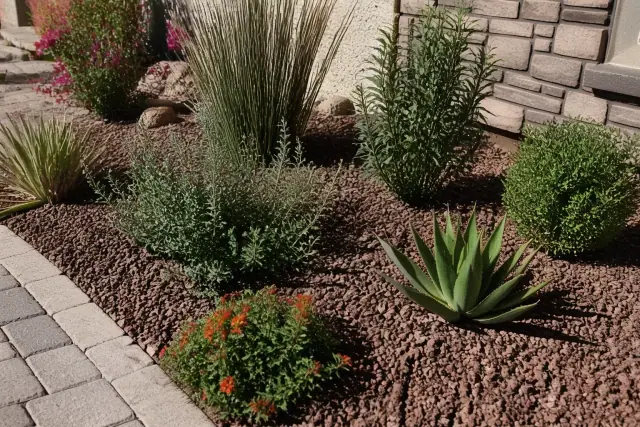
Newly planted desert shrubs and ground cover with red volcanic rock mulch at a residential landscape in Phoenix, AZ.

Shrubs, Ground Covers and Accents

Layered shrubs, spreading ground covers, and sculptural accents add texture and bloom cycles to low-water beds. We locate them according to mature spread and visibility so plants near walks, entries, and patios stay useful instead of becoming constant trimming problems.

  • Texas sage for heat-tolerant shrub structure
  • Brittlebush for native foliage and seasonal flowers
  • Baja fairy duster for airy texture and color
  • Trailing lantana and dalea to shade bare soil
  • Red yucca and agave for durable architectural accents
Request Estimate
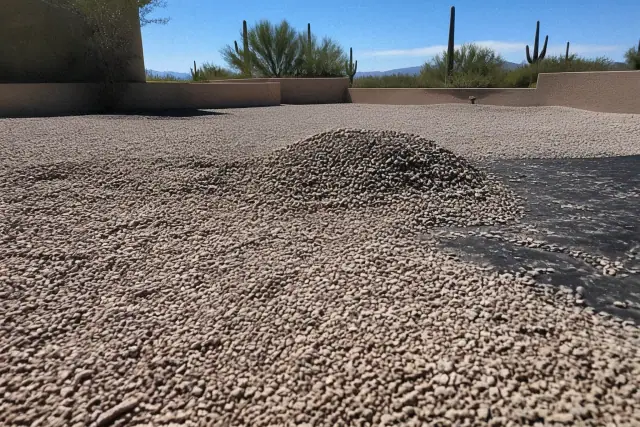
Decorative rock and gravel groundcover being spread in a residential desert landscape in Phoenix, AZ.

Rock and Gravel Groundcover

Stone groundcover can unify planting beds, reduce exposed soil, and complement the home's exterior. Earth-tone materials generally hold their appearance in direct sun better than dyed or very light alternatives, while the selected size and depth affect comfort, stability, and maintenance.

  • Decomposed granite for broad, natural-looking coverage
  • Pea gravel for smaller-scale texture
  • Larger landscape rock for durable visual contrast
  • Weed barrier beneath rock to limit pressure at open soil
  • Graded, properly deep coverage that resists thinning and erosion
Request Estimate
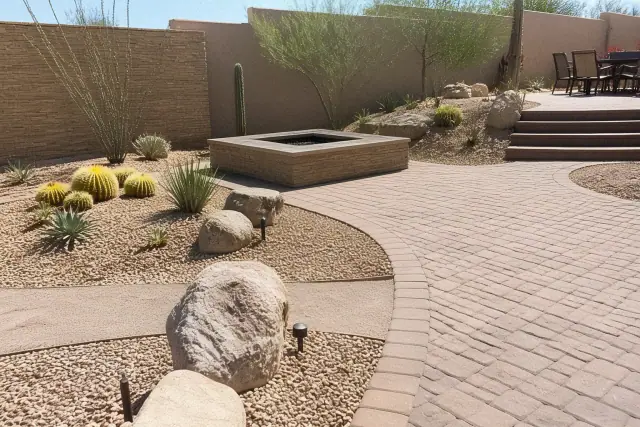
Completed desert landscaping with stone pavers, large boulders, and crushed granite in Phoenix, AZ.

Patios, Boulders and Functional Layouts

A functional desert yard considers movement, afternoon shade, gathering space, and the way planting beds frame the house. During design, we can adjust hardscape and accent locations before construction so the layout supports everyday use as well as curb appeal.

  • Flagstone patio placement planned around outdoor use
  • Accent boulders positioned to anchor planting beds
  • Bed shapes that guide movement through the yard
  • Afternoon shade considered for seating and plant zones
  • Color and texture focused near entries and patios
Request Estimate
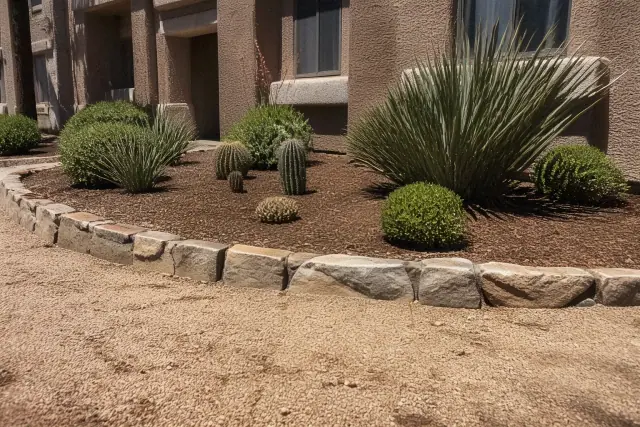
Freshly mulched garden bed with trimmed cacti, desert shrubs, and stone edging in a Phoenix, AZ yard.

Maintenance-Focused Desert Yards

Low-maintenance desert landscaping is designed to reduce repetitive work, not eliminate care altogether. Accessible irrigation, suitable spacing, stable stone coverage, and plants chosen for the site make seasonal upkeep more predictable.

  • Pruning scheduled around each plant's growth cycle
  • Pre-emergent treatment timed to germination windows
  • Manual weed removal at fabric seams and bed edges
  • Periodic raking and top-dressing where rock has thinned
  • Seasonal drip checks and controller adjustments
Request Estimate
Finding Your Right Fit

Choosing the Right Desert Landscaping Approach

The right design reflects your budget, HOA rules, maintenance tolerance, and plans for the space. Sun exposure, reflected heat, drainage, mature plant size, and water needs also shape the palette; those choices determine whether a yard still looks good in five years or needs replanting after two summers.

Phoenix Climate Knowledge

Our work is organized around the Salt River Valley's heat, alkaline caliche, low annual rainfall, and intense monsoon runoff. That local focus informs drainage, irrigation zoning, plant placement, and the materials recommended for exposed surfaces.

3D Design Planning

Three-dimensional landscape design tools let you review the proposed layout before work starts. Bed lines, flagstone patios, boulders, planting zones, and circulation can be adjusted during consultation instead of after installation.

Arborist-Guided Tree Care

ISA-certified arborists support our tree work, including species-aware trimming and placement decisions. Our technicians are also familiar with Arizona Registrar of Contractors requirements, helping the installation hold up to inspection as well as desert conditions.

What Sets Us Apart

Why Choose Us for Phoenix Desert Landscaping?

Phoenix Expert Landscaping coordinates design, demolition, grading, irrigation, soil preparation, planting, groundcover, and ongoing maintenance. You can review a proposed layout, discuss HOA requirements and budget, and receive a free landscape estimate after we walk the property with you.

Request a Free Estimate

Compacted Caliche Soil

Caliche resists root penetration and water infiltration. Without drainage testing, soil amendment, and suitable backfill, a new root ball can sit in trapped water after a heavy rain and develop root rot even in an otherwise dry climate.

Inefficient Turf Irrigation

Spray heads designed for turf can overspray pavement and water areas that no longer need broad coverage. Converting those zones to drip delivery puts water at individual root zones and avoids trying to sustain sod that often browns by June.

Heat-Stressed or Mismatched Plants

A plant suited to morning sun may struggle against a west-facing wall that stores and reflects afternoon heat. Choosing by exposure, mature size, and water need prevents repeated replacement and keeps thirstier plants from driving the irrigation schedule for an entire bed.

Settled Rock and Exposed Fabric

Wind, foot traffic, and shallow installation can thin groundcover until weed barrier shows through. Proper depth and grading reduce that movement; periodic raking and top-dressing help avoid the failed rock landscapes we are often asked to redo within a year or two of installation.

Poor Grading and Drainage

Phoenix receives little annual rain, but monsoon downpours arrive quickly and can push runoff toward foundations and hardscape. Positive grading and appropriate discharge paths move that water away from structures before rock and planting obscure the underlying slope.

Clogged or Broken Drip Emitters

Clogged emitters, line breaks, and incorrect controller programming can leave one plant dry while flooding another. Seasonal inspections catch uneven flow and allow run times to be tightened in winter or extended slightly during peak summer stress without overwatering.

How It Works

Our Desert Landscaping Process

A full conversion moves through evaluation, design, removal, grading, irrigation, soil work, planting, and groundcover in sequence. Most residential projects take a few days to two weeks depending on square footage and the amount of hardscape involved.

01.

Site Evaluation and Goals

We walk the property to review existing turf and plants, sun and shade, drainage, irrigation, access, and how you plan to use the yard. Budget and HOA requirements are documented before design decisions are finalized.

02.

Design and Material Planning

We organize planting and drip zones, select rock and hardscape materials, and prepare a layout that balances function with water efficiency. A 3D view can be used to refine patios, bed shapes, and boulder placement before ground is disturbed.

03.

Turf Removal and Site Preparation

Old turf, unsuitable plantings, construction debris, and root systems are removed from the work areas. Clearing the site creates access for accurate grading, irrigation trenching, and soil preparation.

04.

Grading and Irrigation Installation

The yard is graded away from structures and toward suitable discharge points, then irrigation lines and zones are installed for the final plant plan. Emitters are positioned at the correct distance from each plant's root zone.

05.

Soil Amendment and Planting

Planting areas are checked for drainage, compacted soil is loosened and amended, and root balls receive appropriate backfill. Rushing this preparation is the leading reason new desert plantings fail to establish during their first year.

06.

Rock, Mulch and Final Review

Plants are followed by mulch and the selected rock or gravel at a suitable depth over prepared areas. We review irrigation coverage, drainage paths, and care priorities so the finished yard starts with a practical maintenance plan.

Plan a Water-Wise Yard

Plan Your Desert Landscaping Consultation

Request a free landscape estimate to review your Phoenix property, goals, budget, HOA requirements, and maintenance priorities. We will walk the site with you and outline a desert landscape approach before you commit to the work.

Desert Landscaping Help

Desert Landscaping FAQs

These answers cover common questions about Phoenix desert landscape design, installation, cost, plants, irrigation, and long-term care. Call if you want to discuss how these considerations apply to your property.

Call Our Landscaping Team

Common problems include clogged or broken drip emitters, plants mismatched to their sun exposure, settled rock that exposes weed barrier, and compacted caliche that drains poorly. Overgrown trees or shrubs placed too close to structures can also create repeated maintenance issues.

Seasonal care includes pruning trees and shrubs, controlling weeds at bed edges and fabric seams, and checking drip lines for clogs or breaks. Rock areas may need raking and top-dressing, while mulch should be refreshed periodically around plantings.

Most Phoenix-area desert landscaping projects run between $3,000 and $15,000, with simpler front-yard conversions at the lower end. Complete backyard makeovers with patios, lighting, and irrigation work can reach $20,000 or more, while ongoing maintenance for a typical front yard often runs around $75 a month. We provide a free landscape estimate for the specific scope.

It is lower maintenance than a traditional lawn, but it is not maintenance-free. Seasonal pruning, weed control, irrigation checks, and establishment care keep plants and groundcover healthy without weekly mowing.

Many Phoenix-area HOAs encourage water-wise landscaping, but individual communities may control plant lists, gravel colors, or setbacks. We review the applicable guidelines during design and select materials and plants around those documented requirements.

Xeriscaping is a design method organized around seven principles: planning, soil analysis, practical turf, appropriate plants, efficient irrigation, mulch, and maintenance. Desert landscaping is the broader result, often applying those principles with Sonoran Desert-adapted plants, decomposed granite, and native rock.

Almost always. Turf spray heads distribute water broadly, while desert planting beds generally need drip irrigation that delivers water to individual root zones. We redesign and install irrigation as part of a full conversion instead of relying on the old spray layout.

Most residential conversions take a few days to two weeks. Square footage, demolition, grading, irrigation work, and hardscape scope determine where a project falls within that range.

Palo verde, ironwood, mesquite, saguaro, Texas sage, brittlebush, and Baja fairy duster are among the desert-adapted choices in our plant palettes. Ground covers and accents can include trailing lantana, dalea, red yucca, agave, desert marigold, penstemon, and ocotillo.

Compacted caliche can stop roots from spreading and prevent water from infiltrating evenly. We test drainage, loosen and amend planting zones with organic matter, and use appropriate backfill so water does not collect around new root balls.

Decomposed granite, pea gravel, and larger landscape rock can all suit a desert yard. The choice depends on the home's exterior, the intended texture, traffic, drainage needs, and any HOA material requirements.

Drip systems should be checked at least seasonally for clogged emitters, line breaks, and controller settings. Run times can be tightened in winter and extended slightly during peak summer stress while keeping plant groups on appropriate water-use zones.

Yes. A desert design can organize planting beds, flagstone patios, accent boulders, and circulation around how you use the yard. Reviewing the layout in 3D before installation helps refine those elements around shade, views, and movement.