Proudly serving Phoenix, Scottsdale, Mesa, Tempe, Chandler, Gilbert & surrounding areasCall or Text 24/7: 602-449-0493
Aerial drone view of a suburban neighborhood with terra-cotta roofs and desert landscaping in Phoenix, AZ.

Landscape Maintenance, Estate Yard Care, and Irrigation Services in Paradise Valley, AZ

Phoenix Expert Landscaping provides full-service landscape maintenance for homeowners and property managers throughout Paradise Valley, Arizona. Our licensed and insured crews handle yard cleanup, lawn care, weed control, tree trimming, shrub and hedge trimming, and planting services. We also build desert landscapes, install rock and gravel, and repair irrigation systems for estates, ranch homes, and commercial properties. Work is completed by our own crews rather than handed to subcontractors.

Paradise Valley properties face reflected mountain heat, decomposed granite soil, caliche, monsoon runoff, and demanding water-use conditions. Mountain-adjacent lots and resort corridors can also carry HOA standards for plant palettes, rock color, and trim height. We begin with an on-site walkthrough to understand turf, irrigation, plant health, drainage, and property-specific requirements. That local assessment turns into a seasonal plan sized to the landscape rather than a generic route checklist.

Recurring maintenance can include mowing, edging, weed control, irrigation checks, debris removal, and separately scheduled tree and shrub care. Itemized free quotes show what is included before work begins, with room to adjust as the property changes through the year.

★ ★ ★ ★ ★4.9/5 Average Rating - 20+ Years of Experience - Paradise Valley Landscaping Company Specialists - Residential & Commercial
Paradise Valley Services

Landscape Maintenance Services in Paradise Valley, AZ

Our service area spans a community of 12,658 residents, including properties along Tatum Boulevard, Lincoln Drive, Invergordon Road, and Doubletree Ranch Road, plus areas near Camelback Mountain, Mummy Mountain, the Phoenician, Mountain Shadows, and Cosanti. Routes also reach adjacent Scottsdale, North Phoenix, and unincorporated Maricopa County; owners coordinating multiple Valley properties can also explore service in Cave Creek, AZ . Choose from the core services below, with one company coordinating the work instead of multiple contractors.

Landscape Maintenance

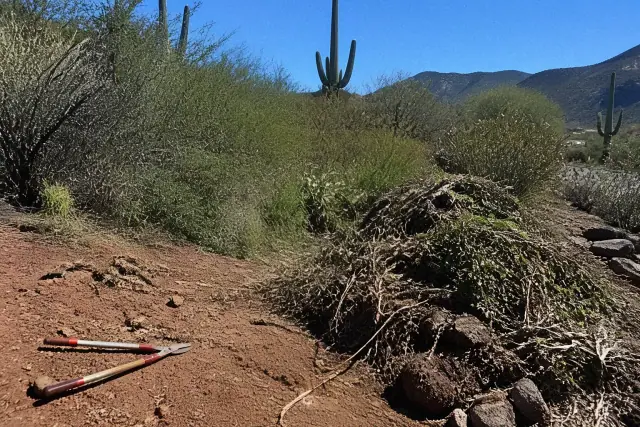
Landscapers clearing overgrown vegetation and weeds to reveal desert soil in Paradise Valley, AZ.

One coordinated program can cover mowing, edging, weed control, irrigation checks, debris removal, and scheduled tree and shrub care. Visits follow a seasonal calendar rather than treating summer growth, fall overseed, and winter frost risk the same.

Explore Service

Yard Cleanup

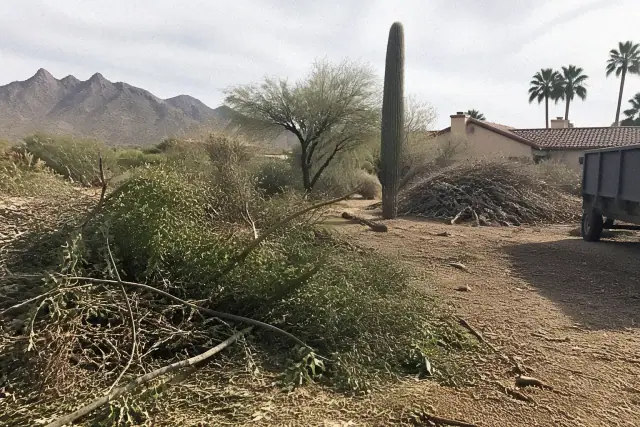
Yard cleanup in progress with piles of trimmings and raked earth in Paradise Valley, AZ.

Cleanup service removes leaf litter, dead plant material, weeds, branches, and wind-scattered gravel, then restores bed edges and levels rock or mulch. Crews also inspect exposed drip lines for leaks hidden beneath debris and dispose of collected green waste.

Explore Service

Lawn Care

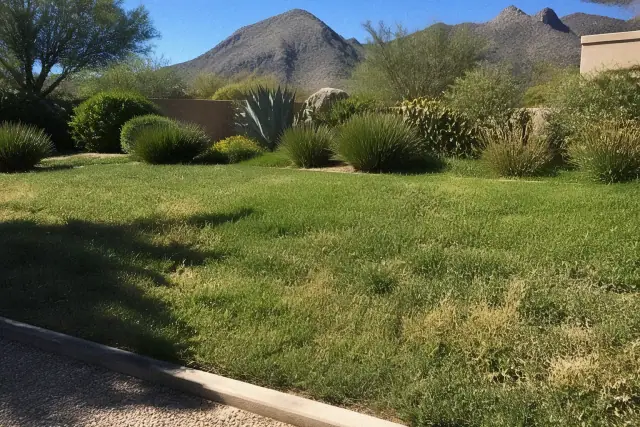
Neglected lawn with weeds and thatch in front of desert landscaping and mountains in Paradise Valley, AZ.

Bermuda and fescue can show chlorosis when Paradise Valley's alkaline soil rises above pH 7.5. Lawn care adjusts mowing height and frequency for Arizona's two growing seasons, times fertilization to seasonal growth, and adds iron only when soil testing indicates it.

Explore Service

Weed Control

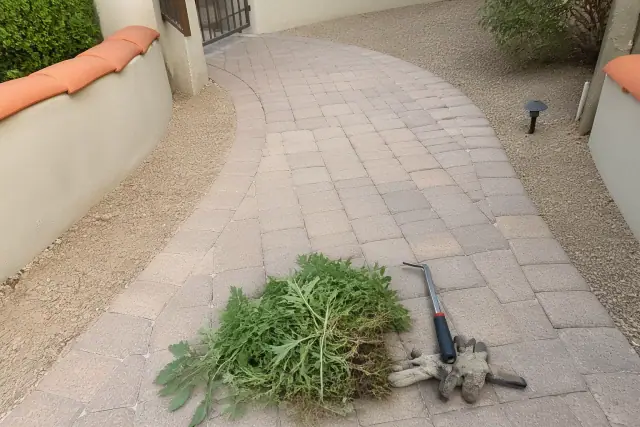
Hand tools and a pile of pulled weeds on a clean paved path in Paradise Valley, AZ.

Pre-emergent treatment is timed before spring and fall germination, with targeted post-emergent work for breakthrough growth. Manual removal is used around planting beds, pools, and water features where drift is a concern, keeping gravel areas from producing new stragglers every six weeks.

Tree Trimming

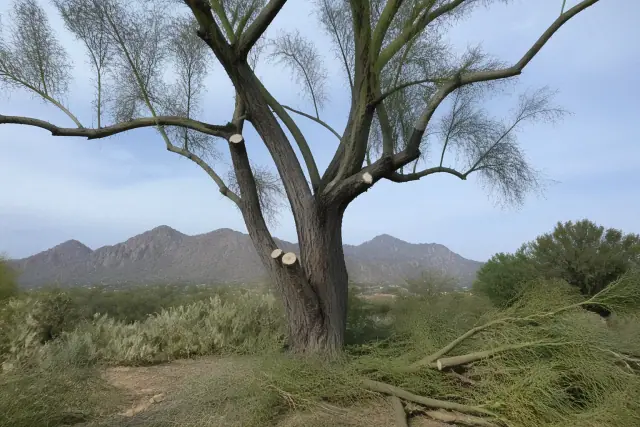
Tree trimming at the base of a mature tree with desert mountain views in Paradise Valley, AZ.

Mesquite, palo verde, ironwood, citrus, and shade trees need species-aware pruning rather than topping. Crews follow ANSI A300 standards to remove deadwood, improve structure, and reduce canopy wind resistance; proactive care can help avoid mature-tree replacement costs that commonly run $500 to $2,700.

Shrub & Hedge Trimming

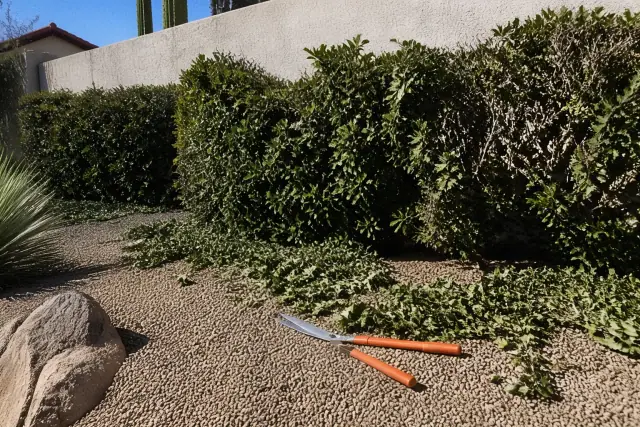
Untrimmed bushes being shaped in a desert landscape in Paradise Valley, AZ with hedge trimmers on the ground.

Oleander, Texas sage, and ficus hedges are shaped on species-appropriate cycles and cut angles. Clean lines support HOA aesthetics, center airflow helps limit monsoon-season fungal problems, and clearance from stucco walls prevents overgrowth from trapping moisture.

Planting Services

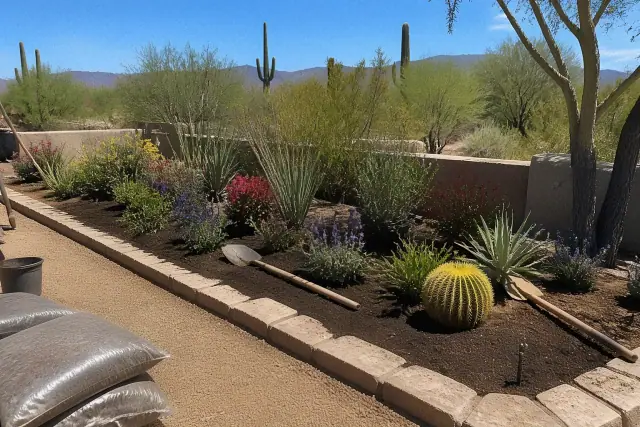
Newly planted desert shrubs and succulents in a garden bed in Paradise Valley, AZ, with shovels and compost bags nearby.

Plant choices are matched to north-facing shade, south-wall exposure, and other microclimates on the same lot. Crews amend backfill where caliche commonly appears eighteen to twenty-four inches below grade, then set proper planting depth and staking because year-one establishment is critical.

Desert Landscaping

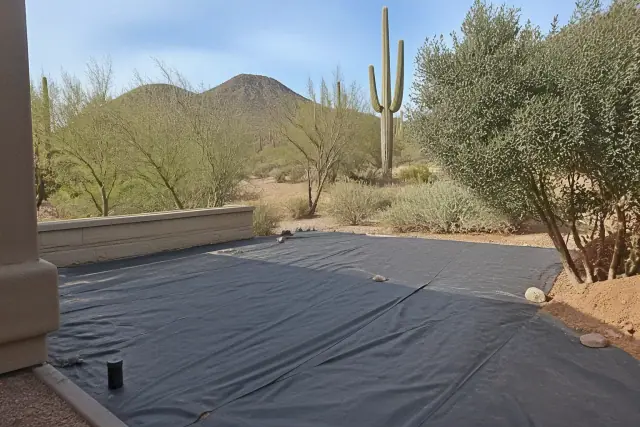
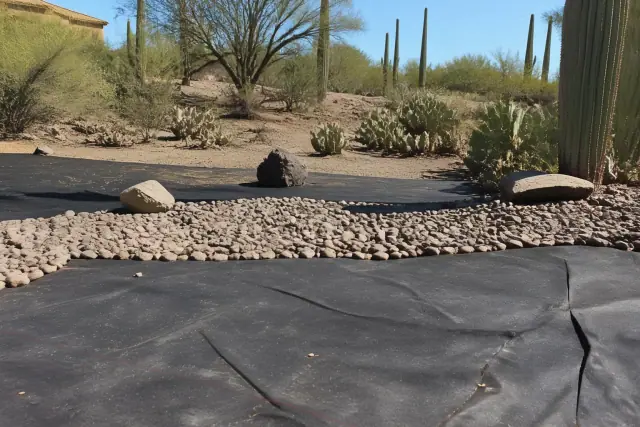
Weed barrier fabric and crushed granite landscaping at a job site in Paradise Valley, AZ with saguaro cacti.

Agave, brittlebush, desert marigold, ocotillo, red yucca, and Texas ranger can create year-round interest with lower water demand. Designs combine plant zoning, drip irrigation, decomposed granite, boulders, and drainage grading for 110-degree summers; native plant landscaping can reduce installation costs by $2,000 to $4,000 per acre compared with turf-heavy designs.

Rock & Gravel Landscaping

Decorative crushed granite and river rock landscaping with desert cacti in Paradise Valley, AZ.

Installations range from 3/8-inch decomposed granite to 2-4-inch riprap for drainage channels and wash areas. Geotextile fabric below the rock limits weed penetration and soil migration, while color and size matching keeps additions within existing HOA palettes and helps prevent failures that can appear within a year.

Irrigation Repair

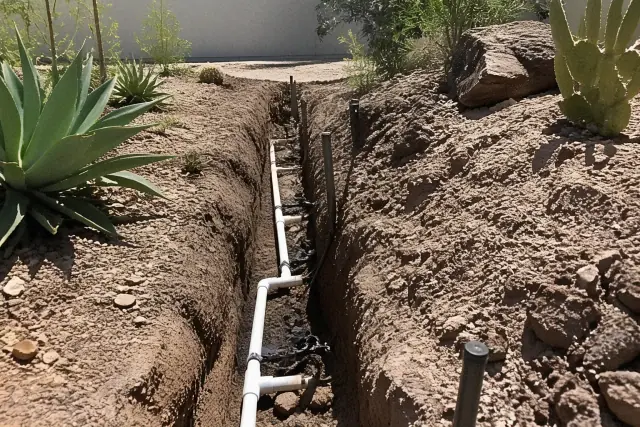
Exposed PVC pipe and sprinkler heads in an irrigation repair trench in Paradise Valley, AZ.

Crews repair valves, controllers, drip lines, emitters, bubblers, and degraded PVC fittings, then recalibrate timers for seasonal demand. Paradise Valley properties with 1970s and 80s-era systems often need brittle fittings replaced rather than repeatedly patched.

Planning the Right Service

How to Choose a Landscape Maintenance Plan

The right plan reflects property size, turf and desert-bed mix, plant maturity, irrigation condition, drainage, HOA requirements, and the amount of seasonal attention each area needs. Use these checkpoints to compare providers and decide whether a cleanup, targeted repair, recurring maintenance, or broader landscape update fits your property.

Seasonal Service Frequency

Match visit frequency to summer bermuda growth, winter slowdowns, monsoon debris, and the timing of pre-emergent applications. A provider should explain how the schedule changes across the year instead of offering one fixed cadence.

Property Scale and Plant Mix

Paradise Valley lots often exceed an acre and may combine turf, rock beds, mature trees, privacy hedges, pools, and hillside drainage. Choose a scope that separates high-frequency tasks from pruning, irrigation, and other work that follows its own cycle.

Tree and Shrub Expertise

Ask how crews approach structural pruning, species-specific trim cycles, freeze risk, and clean clearance around walls and pool decks. Topping or excessive shearing can weaken desert trees and stress shrubs even when the result looks tidy at first.

Irrigation System Condition

A cracked emitter, stuck valve, pinhole leak, or aging PVC fitting changes the service priority. The provider should inspect the full system, explain whether a localized repair is sensible, and recalibrate watering rather than replacing parts without context.

HOA and Site Requirements

Plant palettes, rock color, trim height, access, resort-adjacent settings, and natural drainage easements can shape the plan. Look for a crew that records those requirements before scheduling work and protects pool decks, walls, washes, and business access points.

Clear Scope and Pricing

Compare itemized quotes by visit frequency, included tasks, disposal, plant density, irrigation work, and adjustment terms. Broader household spending on lawn and landscape upkeep rose from $542 in 2021 to $616 in 2022, while industry labor costs were projected to climb roughly 20% by the end of the decade, so a clear scope matters more than a vague flat number.

Paradise Valley Landscape Issues

Common Landscaping Problems on Paradise Valley Properties

Heat, alkaline soil, wind, monsoon rain, aging irrigation, and compacted caliche can create several problems at once. Treating the visible symptom without checking water delivery, drainage, roots, and plant placement often leads to repeat work.

Request a Yard Assessment

Heat-Stressed Turf

Unshaded rock beds can push surface soil temperatures above 140 degrees Fahrenheit, while alkaline soil limits iron uptake and leaves turf yellow or thin. Seasonal mowing, testing, targeted nutrients, and correct watering address causes rather than color alone.

Monsoon Weed Breakthrough

Granite and gravel trap seed and moisture at the surface after rain, allowing weeds to spread quickly. Pre-emergent timing, spot treatment, and hand removal in sensitive areas control growth without blanket applications near pools or water features.

Wind-Damaged Tree Structure

Monsoon microbursts expose deadwood, heavy canopies, weak branch unions, and damage left by past topping. Structural pruning reduces wind resistance, while decay, root damage, or disease may require a removal assessment.

Hidden Drip-Irrigation Leaks

A cracked emitter or pinhole supply-line leak can kill a mature shrub within days during summer. Irrigation checks at recurring visits catch pressure issues, stuck valves, and broken lines before plant loss becomes the first obvious sign.

Caliche and Root Restriction

Decomposed granite over compacted caliche resists water penetration and limits root expansion. Soil amendment, correct planting depth, plant selection, and water zoning help new material establish instead of sitting in a saturated pocket above hardpan.

Poor Drainage and Granite Erosion

The June-through-September monsoon season brings brief, intense rain that can pool in flat beds, scour granite fines, and overwhelm clogged drip systems. Proper grading toward approved discharge points and attention to washes or drainage easements protect hillside and mountain-adjacent lots.

Why Choose Us

Why Choose Phoenix Expert Landscaping in Paradise Valley?

Phoenix Expert Landscaping organizes maintenance around Sonoran Desert conditions, property-specific standards, and direct accountability. Licensed and insured in-house crews combine local plant knowledge with documented irrigation and maintenance decisions, giving owners a clear contact from walkthrough through recurring service.

Local Desert Knowledge

Crews work with decomposed granite, caliche, reflected mountain heat, frost pockets, low-water plants, and monsoon drainage. Xeriscape principles recognized by the Arizona Department of Water Resources guide plant zoning, drip irrigation, and groundcover choices.

Licensed and Insured Crews

Landscape maintenance is performed by the company's own licensed and insured crews, with general liability coverage on each job site. Customers can request proof before signing and do not have to trace responsibility through a subcontractor.

Direct Crew-Lead Communication

Questions go to a crew lead who has walked the property rather than a call center. Repairs and plant replacements are documented for HOA compliance or resale disclosures, so owners can see what changed and why.

A Property-Specific Process

Our Landscape Maintenance Process in Paradise Valley

Each engagement moves from evaluation to a seasonal scope, scheduled work, and documented follow-through. The six steps below keep turf, desert beds, trees, irrigation, and property requirements in one coordinated plan.

01.

On-Site Walkthrough

Assess turf condition, irrigation function, plant health, drainage, pool-adjacent areas, and any HOA landscaping requirements. The walkthrough also separates immediate problems from maintenance that belongs on a seasonal cycle.

02.

Seasonal Maintenance Plan

Build a calendar for spring cleanup, summer heat-stress monitoring, fall overseed or pruning, and winter frost protection. New planting is generally planned for the cooler October-to-March window for the best establishment conditions.

03.

Itemized Free Quote

Define visit frequency, included services, cleanup and disposal, irrigation needs, and separately scheduled tree or shrub work. The free quote makes it easier to right-size the plan without locking into a rigid long-term contract.

04.

Scheduled Landscape Care

Complete mowing, edging, weed control, irrigation checks, and debris removal on the agreed route. Tree and shrub trimming stay on species-appropriate cycles so plants are not over-trimmed simply to match a mowing visit.

05.

Irrigation and Plant Checks

Monitor emitters, valves, controllers, turf response, heat stress, and seasonal watering settings during recurring visits. Flag isolated failures early and explain when an aging multi-zone system needs a broader evaluation.

06.

Documented Follow-Through

Record irrigation repairs and plant replacements, note HOA-sensitive work, and keep communication with the crew lead. Adjust the plan as growth, weather, and property priorities change through the year.

Practical Landscape Outcomes

Landscape Maintenance Outcomes for Paradise Valley Properties

Case Study 1: Healthier turf: Correct seasonal mowing height, edging, fertilization, and test-guided iron support give bermuda, ryegrass, and fescue a plan suited to alkaline desert soil.

Case Study 2: More resilient desert beds: Plant zoning, drip irrigation, amended backfill, geotextile, and drainage grading help low-water landscapes hold their appearance through heat and monsoon rain.

Case Study 3: Fewer surprise repairs: Routine irrigation checks, structural pruning, debris removal, and documented follow-through help surface small failures before they become dead plants, damaged trees, or washed-out rock.

Request a Property Walkthrough

Plan Your Paradise Valley
Landscape
Maintenance

Tell Phoenix Expert Landscaping what is changing on your Paradise Valley property, from recurring maintenance and weed pressure to tree structure, rock beds, planting, or irrigation concerns. An on-site walkthrough leads to an itemized free quote and a seasonal scope matched to the yard, estate, or commercial site.

Paradise Valley Landscape Help

FAQs About Landscape Maintenance in Paradise Valley, AZ

These answers cover pricing, visit frequency, cleanup, irrigation, tree care, desert landscaping, HOA concerns, and service coverage in Paradise Valley. An on-site walkthrough turns this general guidance into a property-specific scope.

Call Our Landscape Team

Monthly maintenance for a typical Paradise Valley residential lot generally falls between $100 and $300, depending on lot size, plant density, and service frequency. Larger estates with extensive rock beds, mature trees, or multiple irrigation zones usually cost more. Phoenix Expert Landscaping provides an itemized free quote after an on-site walkthrough.

Most Paradise Valley properties do well with biweekly maintenance during peak growing months and monthly service during the cooler winter stretch. Turf may need more frequent mowing during summer bermuda growth, while desert beds still need consistent weed control and debris cleanup. Irrigation should be checked at every visit.

A standard cleanup removes leaf litter, dead plant material, weeds, branches, and other debris, then addresses bed edging, rock or mulch leveling, and green-waste disposal. Seasonal work can also include monsoon debris and wind-scattered gravel. Standard residential cleanups are usually completed in a single visit, while a larger estate may require a half-day crew.

Isolated emitter, valve, or line failures can usually be repaired during the visit. Replacement becomes more practical when a system is more than 20 years old, hard-to-source fittings are failing, or several zones have recurring issues. The full system should be assessed before choosing the more expensive option.

Deadwood, crossing branches, a heavy canopy, or storm-related lean often calls for structural pruning rather than removal. Removal becomes appropriate when trunk decay, extensive root damage, or disease has compromised the tree's structure. An on-site assessment should explain the reasoning before either option is recommended.

Yes. Native and low-water plants grouped by water need and supplied through drip irrigation use substantially less outdoor water than a turf-heavy landscape. That approach fits Paradise Valley's location within the Phoenix Active Management Area and its ongoing groundwater-management requirements.

Alkaline soil can lock out iron and cause chlorosis in bermuda and fescue, while heat, watering problems, thatch, or disease can create similar symptoms. Soil and irrigation checks help separate nutrient issues from water-delivery problems before treatment.

Pre-emergent applications are timed before spring and fall germination, then breakthrough growth receives targeted post-emergent treatment. Manual removal is appropriate near pools, water features, and sensitive planting beds where drift is a concern.

Agave, brittlebush, desert marigold, ocotillo, red yucca, and Texas ranger are among the desert-adapted choices used in local designs. Final selection should match sun exposure, frost pockets, drainage, and water zoning on the property.

Structural pruning reduces canopy wind resistance, clear drip systems keep water moving, and properly graded beds limit pooling and granite erosion. Pre-emergent weed timing and cleanup planning also help manage the growth and debris that follow summer storms.

Geotextile fabric beneath rock helps prevent weed penetration and soil migration. The rock size should match its purpose, from finer decomposed granite in beds to larger riprap in drainage channels, while color should fit existing HOA palettes.

Yes. The company serves office parks and resort-adjacent retail as well as residential properties, with commercial work scheduled separately and earlier morning service windows used to reduce business disruption. Scope and timing are set through the same walkthrough and itemized quote process.

Yes. The walkthrough records relevant plant palettes, rock colors, trim heights, access needs, and other property-specific standards. Maintenance and repair records can also support HOA compliance documentation.

Yes. Phoenix Expert Landscaping operates as a licensed and insured contractor, carries general liability coverage on job sites, and performs work with in-house crews rather than subcontractors. Customers can request proof of licensing and insurance before signing.

Routes cover Paradise Valley and extend into adjacent Scottsdale, North Phoenix, and unincorporated Maricopa County pockets. Service includes properties near Camelback and Mummy Mountain, Clearwater Hills, Tatum Boulevard, Lincoln Drive, Invergordon Road, Doubletree Ranch Road, Camelback Country Club, the Phoenician, Mountain Shadows, Cosanti, and Paradise Valley Country Club.