Proudly serving Phoenix, Scottsdale, Mesa, Tempe, Chandler, Gilbert & surrounding areasCall or Text 24/7: 602-449-0493
Aerial drone view of a suburban neighborhood with terra-cotta roofs and desert landscaping in Phoenix, AZ.

Rock, Gravel, and Decorative Stone Landscape Installation Services in Phoenix, AZ

Phoenix Expert Landscaping provides rock and gravel landscaping for residential and commercial properties across Phoenix, Arizona. Our crews install decorative rock, gravel paths, dry creek beds, and desert landscape features designed for Sonoran Desert conditions. We also handle landscape maintenance, weed control, planting, irrigation repair, yard cleanup, and tree, shrub, and hedge trimming so the surrounding yard works as one system. Projects range from lawn conversions in established neighborhoods to bulk-material installations at commercial properties.

Phoenix averages around eight inches of rain annually, while turf needs roughly 55 inches of supplemental water per year to stay green. Replacing a struggling lawn with decorative rock can sharply reduce irrigation demand while creating a durable desert landscape. We assess grade and drainage, prepare the sub-base, and install commercial-grade weed barrier where it suits the planting plan. Every crew member works under our Arizona Registrar of Contractors license, and we carry the general liability coverage required for covered home-improvement work.

Choose from screened decorative gravel, crushed granite, decomposed granite, river rock, pea gravel, rip rap, dark accent rock, and larger focal stone. We coordinate bulk delivery, match material to existing hardscape, and provide a written quote broken out by material and labor before work begins.

Phoenix Expert Landscaping provides rock and gravel landscaping in Phoenix and nearby Scottsdale, Tempe, Mesa, Chandler, Glendale, and Peoria.

★ ★ ★ ★ ★4.9/5 Average Rating · 20+ Years of Experience · Thousands of Customers Helped · Licensed & Insured · Residential & Commercial

Rock & Gravel Landscaping Benefits

What Does Rock & Gravel Landscaping Include?

Rock and gravel landscaping is a complete surface system, not simply stone spread over soil. A sound installation accounts for drainage, irrigation, plant access, pedestrian use, and the way heat reflects or radiates near the home.

Our crews remove turf, roots, and debris; cap, reroute, or convert sprinkler lines to drip; correct the grade; and compact road base where walkways or other load-bearing areas require it. Decorative material is then spread and leveled to a consistent depth suited to the application.

The result can be a lower-water lawn replacement, a defined planting bed, a compacted pathway, a poolside surface, a dry creek bed, or a refreshed commercial perimeter. Material size, color, base preparation, and maintenance plan are selected around how that area must perform.

Benefits for Phoenix Desert Properties

Properly selected landscape rock works with Phoenix's intense sun, low humidity, short monsoon downpours, and drought-focused landscape expectations. It lowers routine upkeep without removing the need for occasional cleanup and weed control.

  • Decorative rock itself needs no irrigation
  • Resists intense UV exposure and daily foot traffic
  • Does not rot or blow away like organic mulch
  • Avoids mulch replacement every one to two years
  • Suppresses weeds when fabric and depth are appropriate
  • Pairs naturally with agave, red yucca, and desert marigold
  • Supports drainage features for concentrated monsoon runoff
  • Reduces ongoing landscape-maintenance hours
Rock & Gravel Services

Phoenix Rock & Gravel Services

From a small border refresh to a full residential lawn conversion or commercial installation, we coordinate material, access, base preparation, placement, and cleanup. Each service is adapted to the surface's drainage, traffic, planting, and visual requirements.

Decorative Rock Installation

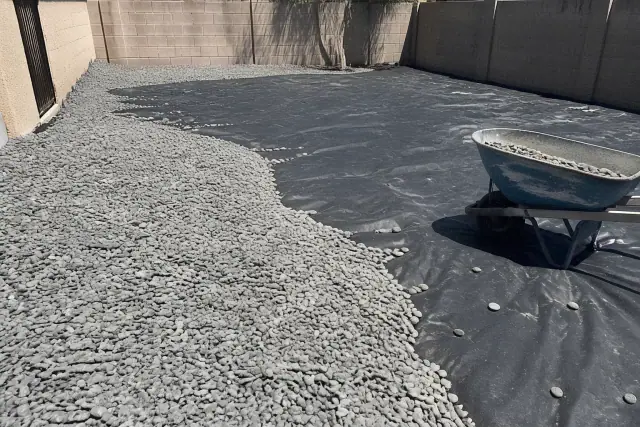
Decorative rock installation in progress on black weed barrier fabric in Phoenix, AZ.

We install screened decorative rock at the depth the space requires, typically 2 to 3 inches for standard yard coverage. The crew grades and levels the surface so rock coverage remains even around planting beds, borders, and open yard areas.

Request Estimate

Bulk Rock Delivery & Staging

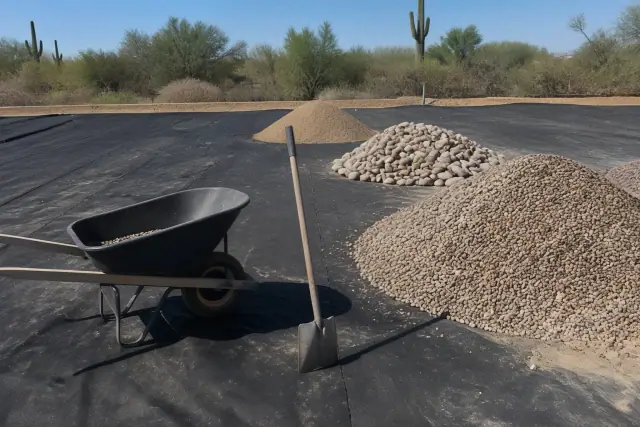
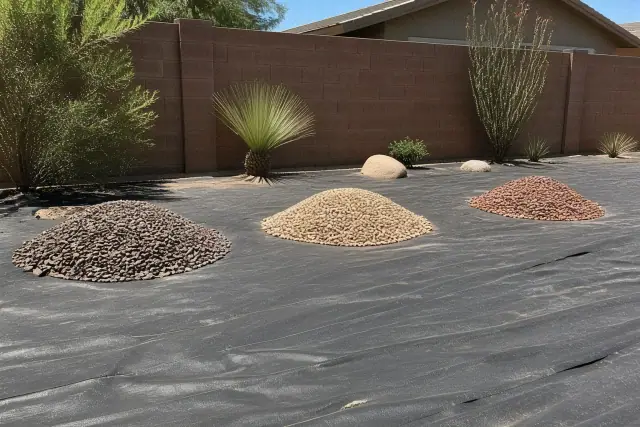
Piles of decorative rock and tools staged on weed barrier fabric at a landscaping jobsite in Phoenix, AZ.

We coordinate delivery for anything from a few cubic yards to a full truckload and stage it around property access and the installation schedule. Thoughtful staging helps prevent two extra days of wheelbarrow hauling, and standalone gravel delivery is also available for homeowners completing a DIY project.

Request Estimate

Lawn-to-Rock Conversions

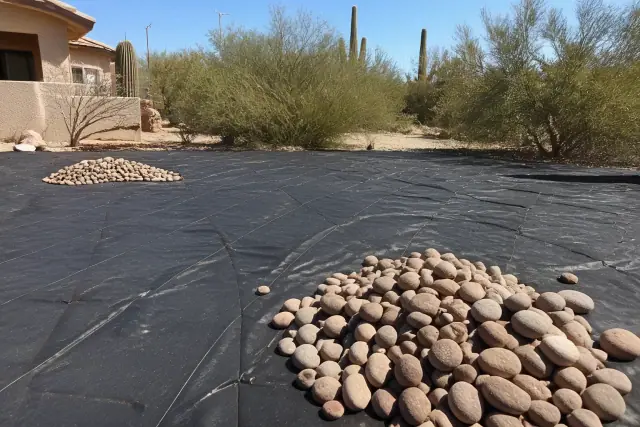
Weed barrier fabric pinned to the ground for a lawn-to-rock conversion project in Phoenix, AZ.

Our lawn conversions remove struggling fescue or bermuda, address roots and debris, and adapt the existing irrigation to the new planting plan. The finished rock bed cuts turf watering while creating a desert-appropriate setting for homes in areas such as Sunnyslope and Laveen.

Request Estimate

Dry Creek Beds & Drainage Rock

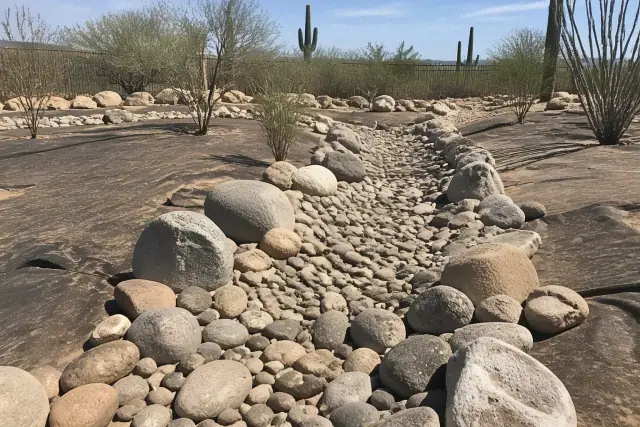
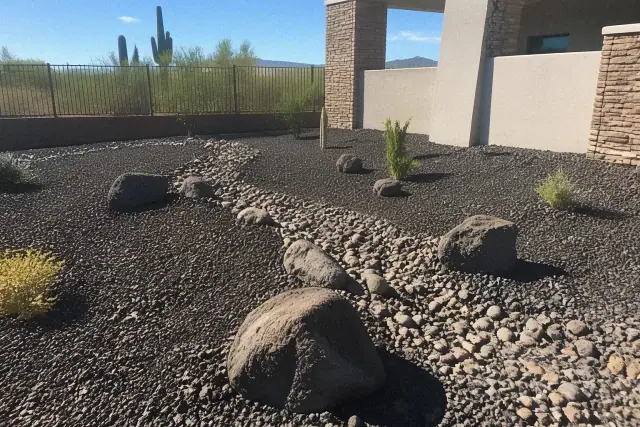
Dry creek bed and drainage rocks installed in a residential yard in Phoenix, AZ.

River rock and rip rap can shape dry creek beds that direct concentrated monsoon runoff away from foundations. We assess existing flow paths before placement so the feature supports drainage as well as the landscape design.

Request Estimate

Gravel Paths & Decomposed Granite

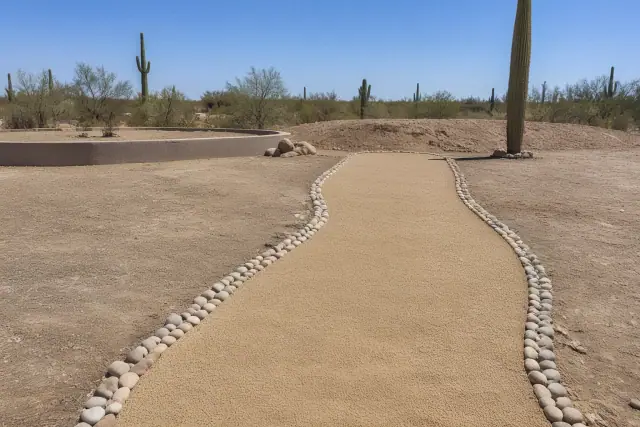
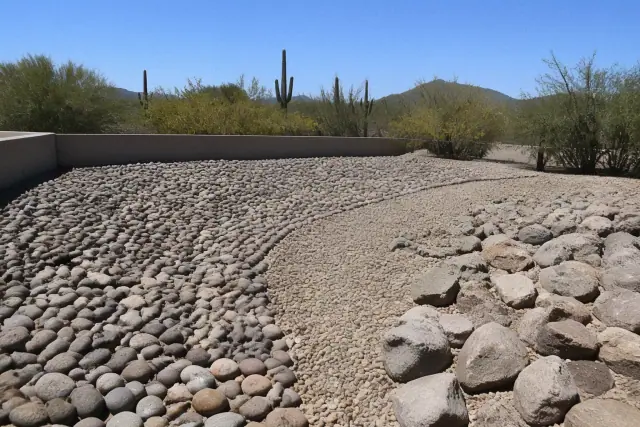
Gravel path with decomposed granite and saguaro cactus in a desert landscape in Phoenix, AZ.

Decomposed granite creates a finer, compactable pathway surface, while pea gravel offers a rounded feel near pools and patios. Foot-traffic-only paths may use 2 inches of decorative rock over a prepared base, while wheelbarrow, cart, or occasional vehicle traffic calls for closer to 3 to 4 inches and a more substantial base.

Request Estimate

Rock Refreshes & Top-Offs

Fresh granite gravel being spread over weed barrier fabric at a landscaping job site in Phoenix, AZ.

Existing beds can be cleaned, color-matched, and topped off where rock has thinned or shifted. We source bulk material from regional suppliers to coordinate with established hardscape and choose rock intended to hold its color under strong UV exposure.

Request Estimate
Material Selection

Decorative Rock & Gravel Options

Rock type, screening size, color, shape, and heat behavior all affect performance. Our standard range spans 3/8-inch decorative gravel through larger 6- to 8-inch accent stone, allowing the surface to be matched to planting beds, paths, drainage areas, and focal points.

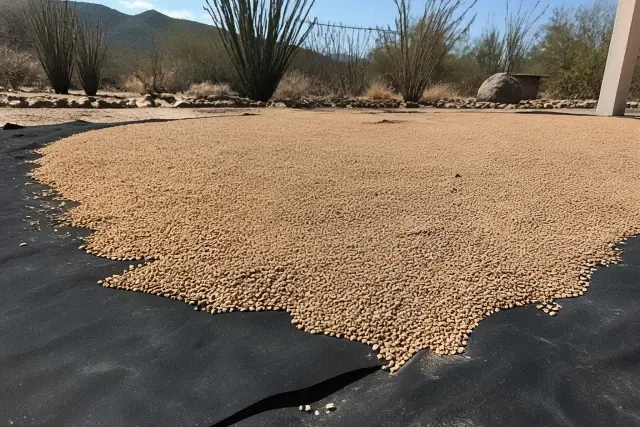
Screened decorative gravel spread over weed barrier fabric in a Phoenix, AZ landscape with ocotillo cactus in the background.

Screened Decorative Gravel

Screened gravel offers broad color and size choices for everyday yard coverage. Material near 3/4 inch is the most common balance of walkability and visual weight, while 3/4- to 1-inch earth tones often complement Sonoran Desert xeriscaping.

  • 3/8-inch gravel for tighter planting beds
  • 3/4-inch rock for standard yard coverage
  • 1- to 2-inch rock for exposed, wind-prone areas
  • Standard 3/8- to 3/4-inch gravel: generally $45-$85 per ton
  • Smaller gravel helps keep drip emitters and plant crowns clear
Request Estimate
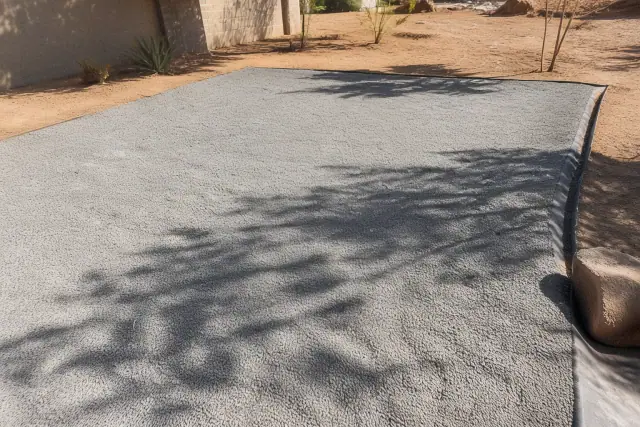
Crushed and decomposed granite installed over weed barrier fabric at a landscaping job site in Phoenix, AZ.

Crushed Granite & Decomposed Granite

Crushed granite and decomposed granite are budget-minded choices for wide coverage, side yards, commercial perimeter beds, and compacted paths. Decomposed granite and sand mixes generally run about $35 to $60 per ton for material only.

  • Compactable texture for pathways
  • Gray and tan options for broad coverage
  • Useful where exact color matching matters less
  • Supports weed-control and drainage goals
  • Lower material cost than many specialty colors
Request Estimate
Fresh installation of river rock, pea gravel, and rip rap in a Phoenix, AZ landscape with saguaro cactus in the background.

River Rock, Pea Gravel & Rip Rap

River rock in the 1- to 3-inch range suits dry creek beds and runoff channels, while smaller, rounded pea gravel is more comfortable underfoot near pools and patios. River rock and rip rap generally cost $60 to $110 per ton for material only.

  • River rock for dry creek beds
  • Rip rap for larger drainage features
  • Pea gravel for comfortable walking areas
  • Rounded shapes for softer visual transitions
  • Useful around pools, patios, and focal beds
Request Estimate
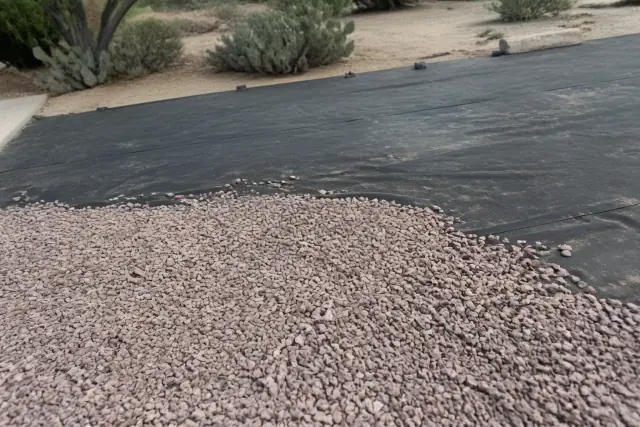
Apache Brown, Madison Gold, and Red Rock landscaping installation in a Phoenix, AZ yard with creosote bushes.

Apache Brown, Madison Gold & Red Rock

Warm red, rust, and gold tones complement the brick and stucco finishes common around Phoenix and tend to disguise dry-season dust better than pale gravel. Apache Brown and Madison Gold generally run about $55 to $65 per ton for material only.

  • Apache Brown for warm earth-tone coverage
  • Madison Gold for a brighter desert palette
  • Sedona Red for pronounced accent color
  • Coordinates with red brick and stucco
  • Echoes regional red-rock scenery
Request Estimate
Dark volcanic rock and decorative stone landscaping installed in a Phoenix, AZ yard with a saguaro cactus in the background.

Dark Rock & Premium Accents

Black lava rock and dark basalt create a clean contrast for desert-contemporary designs, while polished Mexican beach pebble and larger boulders work as premium focal accents. Because dark rock absorbs and radiates more heat, it is usually better in borders or limited beds than across large areas beside seating and walkways.

  • Black lava rock for high-contrast beds
  • Dark basalt for minimalist layouts
  • Mexican beach pebble for polished focal areas
  • Accent boulders for entryways and rock gardens
  • Limited placement where surface heat matters
Request Estimate
Finding Your Right Fit

Choosing the Right Rock & Gravel Approach

The right approach balances appearance with grade, drainage, access, traffic, nearby plants, reflected heat, and budget. Smaller 3/8-inch rock covers more square footage per ton, while larger material has more visual weight and resists displacement in exposed yards. Labor generally falls between $100 and $150 per ton, with added grading, removal, slope complexity, and hand-wheeled access increasing the work involved.

ROC-Licensed Project Work

Arizona requires a Registrar of Contractors license for landscaping contracts exceeding $1,000. Phoenix Expert Landscaping operates under a valid ROC license, and our crews work under that license with the liability coverage required for covered home-improvement contracts.

Grade and Drainage Planning

We evaluate how water moves across the lot before placing material, then slope the base away from the foundation and compact load-bearing areas as needed. This planning helps prevent pooling, runoff channels, and erosion that can undermine an otherwise attractive installation.

Regional Rock Matching

We source bulk landscape rock from regional suppliers so new material can coordinate with existing hardscape and endure Phoenix UV exposure. Delivery quantities and staging are planned before installation, reducing unnecessary movement across the property.

What Sets Us Apart

Why Choose Us for Rock & Gravel Landscaping in Phoenix?

Our process connects material selection with the practical work beneath the surface: measurement, irrigation changes, grading, base preparation, barrier placement, delivery, and even spreading. You receive a written quote that separates material and labor, along with recommendations based on the yard's use rather than color alone.

Request a Yard Consultation

Water-Hungry Turf

Turf that depends on roughly 55 inches of supplemental water each year is a difficult fit for a city receiving around eight inches of natural rainfall. Converting selected lawn areas to rock reduces that irrigation load while retaining drip-watered desert plants where desired.

Weeds Above the Barrier

Weed barrier does not stop seeds from germinating in dust and organic matter that collect on top of the rock. Seasonal pre-emergent treatment, blowing, and cleanup address that surface layer, while properly overlapped and pinned fabric prevents the gaps that often cause barrier failure within the first year or two.

Monsoon Runoff and Erosion

Phoenix's June-through-September monsoon season can move silt, debris, and loose rock across sloped grades, with short, intense bursts especially common in July and August. Correct grading, suitable stone size, and drainage features help direct water away from foundations and reduce displaced material.

Heat Around Patios and Walkways

Dark gravel absorbs and radiates more heat, while light stone reflects more sun toward windows and outdoor living areas. We consider those tradeoffs before placing black rock, pale gravel, or other strong colors beside patios, seating, paths, and pool areas.

Thin or Migrating Rock

Rock installed too thin can expose soil or fabric, weaken weed suppression, and shift under traffic or runoff. A consistent target depth matched to the rock size and use keeps coverage more stable, while periodic top-offs restore older beds where material has migrated.

Unstable Gravel Driveway Base

Standard weed fabric beneath a gravel driveway can allow vehicle weight to push stone into the fabric, create ruts, and prevent fines from locking into the sub-base. Load-bearing areas perform better with properly compacted road base and, where appropriate, a geotextile stabilization grid instead of ordinary planting-bed fabric.

How it works

Our Rock & Gravel Installation Process

A durable rock landscape begins with what happens before the delivery truck arrives. We move from site assessment and material calculations through preparation, grading, placement, and final cleanup in a deliberate sequence.

01.

Assess the Site

We inspect existing grade, drainage paths, access, turf, roots, debris, irrigation, planting areas, and load-bearing surfaces. Utility lines are checked before excavation begins.

02.

Measure and Quote

We measure square footage, select a target depth, calculate cubic yardage, and prepare a written material-and-labor quote. The basic calculation is length times width, multiplied by depth in feet for cubic feet, then divided by 27 for cubic yards.

03.

Remove Turf and Adjust Irrigation

Old turf, roots, and debris are removed to bare soil. Sprinkler heads and irrigation lines are capped, rerouted, or converted to drip according to the new plant layout.

04.

Correct the Grade and Base

The sub-base is graded to move water away from the foundation, and road base is compacted where walkways or other load-bearing areas demand it. This step establishes drainage and surface stability before decorative material is added.

05.

Install Barrier and Spread Rock

Commercial-grade weed barrier is overlapped and pinned in appropriate rock beds but omitted where trees and shrubs need root access to open soil. Delivered material is then spread evenly to the selected depth without covering plant crowns or drip emitters.

06.

Level, Clean Up, and Plan Maintenance

We level the finished surface, clear installation debris, and review how to keep the rock clean. Seasonal weed control and a post-monsoon cleanup with a fall top-off help the desert landscape retain even coverage over time.

Plan Your Desert Yard

Schedule a Rock & Gravel Consultation

Tell us whether you are replacing turf, refreshing an existing bed, building a path, or improving drainage. We will measure the area, discuss material and heat considerations, and prepare a written quote for your Phoenix property.

Rock & Gravel Help

Phoenix Rock & Gravel Landscaping FAQs

These answers cover licensing, base preparation, material depth, pricing, maintenance, delivery, and other practical questions about rock and gravel landscaping in Phoenix. For a project-specific recommendation, request a yard consultation and written quote.

Call Our Landscaping Team

Arizona requires a Registrar of Contractors license for a landscaping contract exceeding $1,000, which includes most rock and gravel installation projects. Phoenix Expert Landscaping operates under a valid ROC license and carries the liability coverage required to hold it. Homeowners should confirm a contractor's current status directly with the Registrar before signing.

Repeated vehicle weight can push gravel into and through ordinary weed fabric, creating ruts and exposed material. Fabric can also keep fine gravel particles from locking into the compacted sub-base. A prepared road base, sometimes paired with a geotextile stabilization grid, is generally more suitable for a load-bearing driveway.

Two inches of decorative rock is generally sufficient for a foot-traffic-only path over a prepared base and suitable fabric. A route used by wheelbarrows, carts, or occasional vehicles is better with closer to 3 to 4 inches and a more substantial compacted base. Going below 2 inches can expose soil or fabric and reduce weed suppression.

Rock needs no watering, tolerates UV exposure and foot traffic, suppresses weeds when installed correctly, and lasts far longer than organic mulch. It can also absorb or reflect heat, is harder to remove if the design changes, and still needs occasional rinsing, blowing, and weed control. For many Phoenix yards, lower water use and reduced replacement frequency outweigh those tradeoffs.

Multiply length by width for square footage, multiply by the desired depth in feet for cubic feet, and divide by 27 for cubic yards. A standard 2-inch layer is about 0.17 feet deep, so a 1,000-square-foot yard needs roughly 6 cubic yards. Exact tonnage varies with rock density, and we calculate it as part of the quote.

Light rinsing or occasional leaf blowing keeps dust and organic debris from settling into the rock. A more thorough cleanout after monsoon season removes silt and plant material that wash into beds. Avoid directing a pressure washer at fabric-lined areas because high pressure can move rock or dislodge the barrier.

A small accent bed or border touch-up can be a reasonable DIY project for someone comfortable with grading and manual material handling. Full-yard conversions, drainage correction, and irrigation rerouting benefit from professional equipment and experience reading water movement. Poor grading can produce pooling or erosion within the first year.

Bulk landscape rock generally runs $45 to $110 per ton depending on type, color, and screening size. Installed pricing that includes labor, delivery, and fabric typically falls between $100 and $150 per ton. A common 15-ton project for a mid-size front and back yard can run around $2,000 including delivery before installation labor is added.

Screened rock around 3/4 inch is the most common choice for standard coverage because it balances walkability and visual weight. Earth-tone rock from 3/4 to 1 inch also works well with desert plants such as agave, red yucca, and desert marigold. Smaller or larger material may be better for tight beds, exposed areas, drainage, or accents.

River rock in the 1- to 3-inch range suits dry creek beds that channel monsoon runoff. Smaller, rounded pea gravel is usually more comfortable underfoot near pools, patios, and walking areas. The base and grade still need to match the expected water flow and traffic.

No. Properly overlapped fabric suppresses growth from below, but wind-blown seed can germinate in dust and organic matter that settle on top of the rock. Seasonal pre-emergent treatments and routine debris removal are more effective long term than relying on fabric alone.

Yes. We can coordinate standalone gravel delivery for Phoenix homeowners completing their own rock-landscaping project. Tonnage, distance from the supply yard, property access, and staging needs affect the delivery cost and schedule.

Phoenix Expert Landscaping serves residential and commercial properties throughout Phoenix, including areas such as Arcadia, Ahwatukee, Sunnyslope, Laveen, Desert Ridge, and the Camelback Corridor. Nearby service areas named for this work include Scottsdale, Tempe, Mesa, Chandler, Glendale, and Peoria. Project availability depends on the property and scope.