Proudly serving Phoenix, Scottsdale, Mesa, Tempe, Chandler, Gilbert & surrounding areasCall or Text 24/7: 602-449-0493
Aerial drone view of a suburban neighborhood with terra-cotta roofs and desert landscaping in Phoenix, AZ.

Tree Trimming, Pruning, and Storm-Damage Mitigation Services in Phoenix, AZ

Phoenix Expert Landscaping provides tree trimming for homes and businesses in Phoenix, with pruning planned around desert species and local climate extremes. Our crews perform crown thinning, crown raising, crown reduction, deadwood removal, and storm-damage trimming. We also coordinate shrub and hedge trimming, planting, desert landscaping, lawn care, weed control, irrigation repair, yard cleanup, rock and gravel landscaping, and ongoing landscape maintenance.

Phoenix summers can push past 110 degrees for weeks, while monsoon microbursts expose weak limbs and overloaded canopies to wind gusts that reach 50 mph. We evaluate canopy density, branch attachment angles, and deadwood load before choosing a cut. That deliberate approach reduces wind resistance without stripping away the partial shade desert trees need to protect their bark from sunscald.

ANSI A300 pruning standards guide our work, including cuts outside the branch collar and removal of no more than 25 percent of a tree's live canopy in one visit. We provide a walk-through estimate before work begins.

Phoenix Expert Landscaping provides tree trimming throughout Phoenix and nearby Tempe, Scottsdale, Mesa, Glendale, and the greater Maricopa County metro area.

★ ★ ★ ★ ★4.9/5 Average Rating · 20+ Years of Experience · Thousands of Customers Helped · Licensed & Insured · Residential & Commercial

Tree Trimming Options & Benefits

What Does Professional Tree Trimming Include?

Professional trimming starts with the tree's structure. We look for included bark, codominant stems, crossing branches, uneven weight, and deadwood that may not be obvious from the curb.

Cuts are selected for a specific purpose: thinning improves airflow, raising creates clearance, and reduction brings an overextended crown back into balance. Dead, diseased, and storm-weakened limbs come off first at the branch collar rather than with flush cuts that damage the trunk's natural defense zone.

Phoenix timing matters as much as technique. Palo verdes, mesquites, desert willows, ash trees, eucalyptus, and palms respond differently to heat, drought, monsoon growth, and dormancy, so the plan must fit the species and season.

Benefits of Purposeful Tree Trimming

Correct pruning improves structure and clearance while preserving enough living canopy for recovery. Consistent proper pruning can extend a tree's functional lifespan by up to 25 percent, according to International Society of Arboriculture research cited in the source material.

  • Reduce canopy resistance to monsoon winds with selective crown thinning
  • Create clearance above roofs, walkways, driveways, and parking areas
  • Remove rubbing branches before they damage bark
  • Balance lopsided growth with selective crown reduction
  • Improve light penetration to lower branches without over-thinning
  • Preserve partial canopy shade that helps protect bark from sunscald
  • Remove dead, diseased, and storm-weakened limbs first
  • Protect pools, walls, irrigation lines, and plantings with controlled cutting
Phoenix Tree Care

Phoenix Tree Trimming Services

Each service solves a different structural or clearance problem. We combine only the cuts a tree needs, whether the goal is lighter wind load, safer access, storm cleanup, or a dependable maintenance rhythm.

Crown Thinning

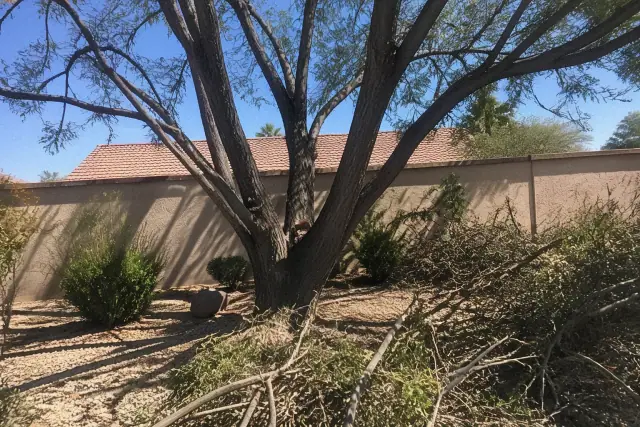
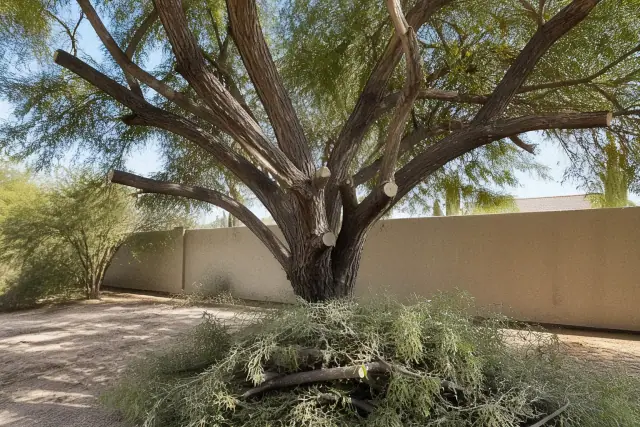
Crown thinning and pruned wood piles at the base of a tree on a gravel landscape in Phoenix, AZ.

Selective crown thinning removes crowded or poorly attached branches to improve airflow and reduce wind resistance. The goal is an evenly distributed canopy, not the sparse interior left by over-thinning.

Request Estimate

Crown Raising

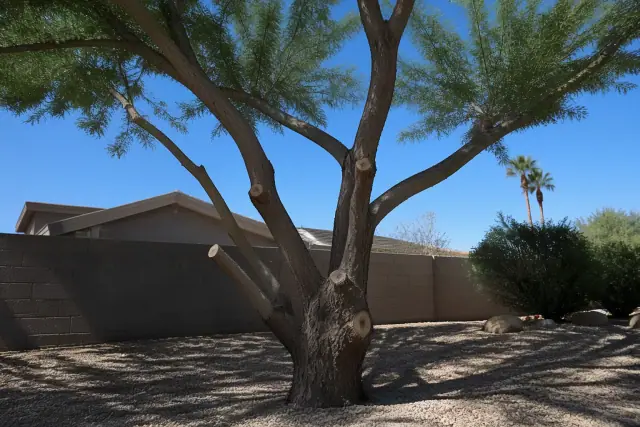
Crown raising on a mature tree showing pruned lower branches at a work site in Phoenix, AZ.

Crown raising removes selected lower limbs to clear structures, walkways, driveways, and commercial parking areas. Cuts are balanced so needed clearance does not leave the tree top-heavy or stripped on one side.

Request Estimate

Crown Reduction

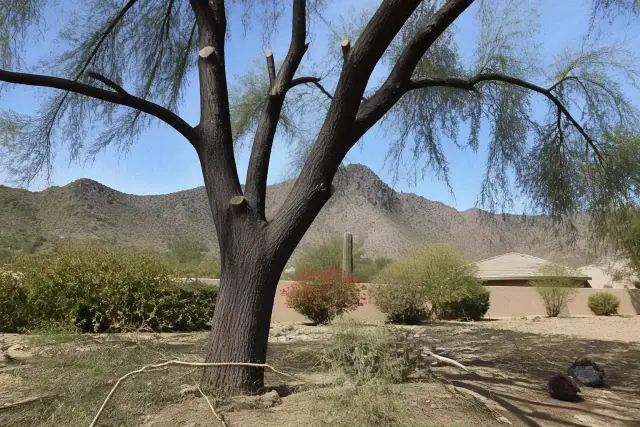
Technician performing crown reduction tree trimming in Phoenix, AZ, with a desert mountain backdrop.

Crown reduction shortens overextended limbs and reshapes trees that have outgrown their available space. Proper reduction cuts preserve viable lateral branches instead of topping the trunk and triggering weak regrowth.

Request Estimate

Deadwood and Hazardous Limb Removal

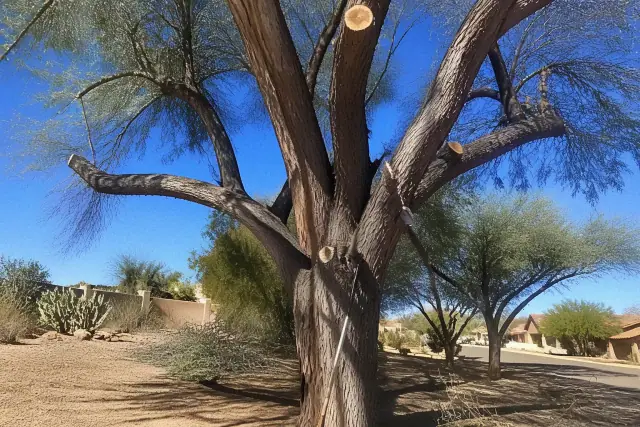
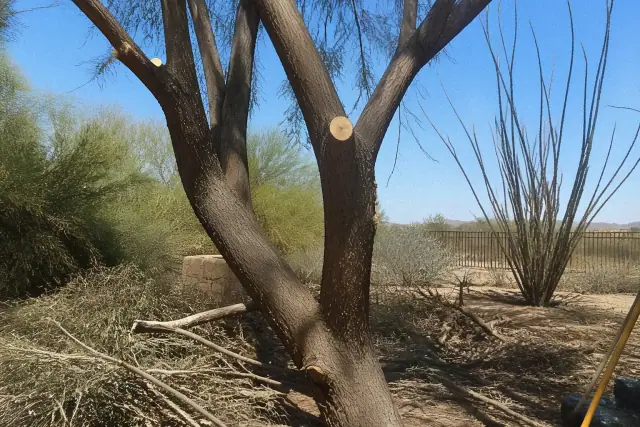
Fresh pruning cuts on the trunk and lower branches of a tall tree during deadwood removal in Phoenix, AZ.

Dead, diseased, or hanging branches are prioritized because they pose the clearest risk to roofs, cars, fences, and walkways. Heavier limbs above sensitive areas are rigged and lowered in controlled stages rather than dropped.

Request Estimate

Monsoon Storm-Damage Trimming

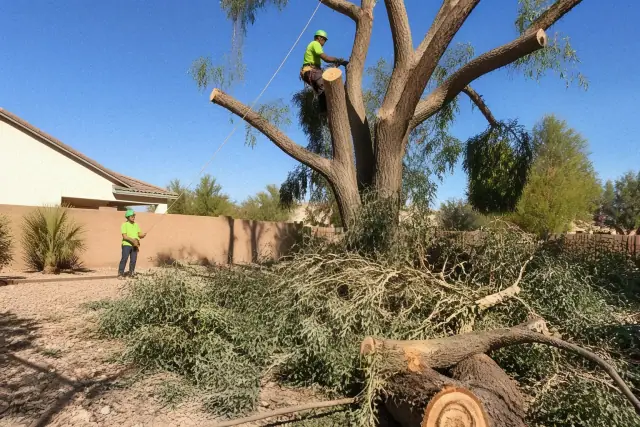
Tree trimming crew removing storm-damaged branches from a large tree in a Phoenix, AZ yard.

After a microburst, we identify split leaders, partially detached limbs, and storm-stressed deadwood that needs prompt attention. During peak monsoon weeks in July and August, storm-related trimming calls move forward whenever crew capacity allows.

Request Estimate

Scheduled Tree Maintenance

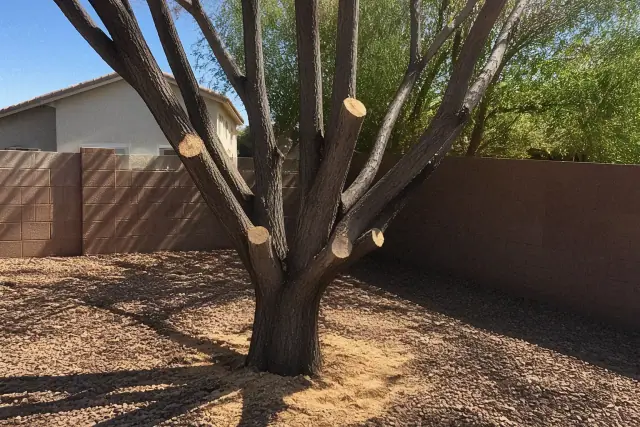
A pruned tree with fresh branch cuts and a pile of trimmings on the ground at a home in Phoenix, AZ.

Residential, HOA, office park, and retail properties can use recurring visits to maintain canopy clearance and address developing weak points. Seasonal packages can bundle tree trimming with lawn care or broader landscape maintenance at a lower per-visit cost than one-off calls.

Request Estimate
Specialized Tree Care

Specialized Tree Care Approaches

Good tree care connects pruning technique with structural assessment, seasonal timing, property protection, and the condition of the surrounding landscape. These approaches help us match the work to the tree rather than apply one routine to every property.

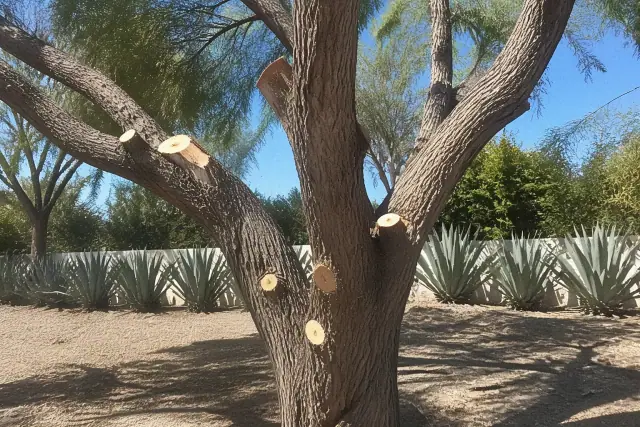
A tall tree trunk with pruned branches and agave plants in the desert soil in Phoenix, AZ.

Canopy Management Techniques

Canopy management uses distinct cuts to improve form, clearance, and wind response without forcing unnecessary stress recovery.

  • Crown thinning for airflow and lower wind resistance
  • Crown raising for structure and walkway clearance
  • Crown reduction for trees that have outgrown their space
  • Competing-leader removal for more stable structure
  • Crossing-branch removal before rubbing damages bark
Request Estimate
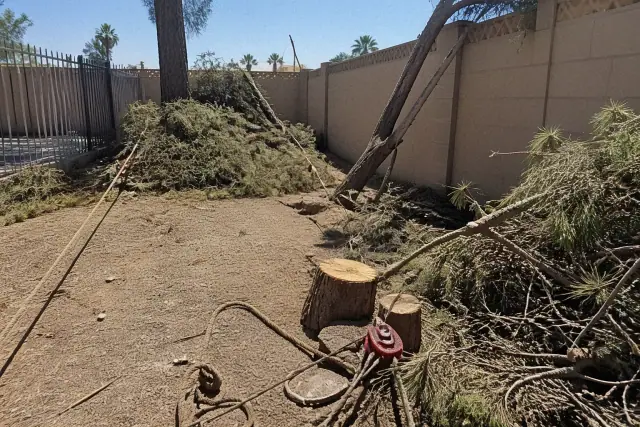
Freshly sawn wood stumps and professional rigging gear during a tree maintenance job in Phoenix, AZ.

Hazard and Storm Response

Storm work begins with the defects most likely to fail, followed by controlled removal that protects the property below.

  • Hanging or partially detached limb removal
  • Split main-leader and trunk-integrity assessment
  • Deadwood and storm-weakened branch removal
  • Rigged lowering above roofs, walkways, and plantings
  • Prompt scheduling priority when crew capacity allows
Request Estimate
Tree trunk with pruning marks and branch debris during a health assessment in Phoenix, AZ.

Tree Health and Structure Assessment

Some visible canopy problems begin with structural defects, disease, roots, or planting depth rather than excess growth. The assessment helps separate issues trimming can improve from conditions that may make removal the safer option.

  • Included bark and codominant stem checks
  • Root plate stability and root rot indicators
  • Major trunk cavity and split-leader review
  • Bacterial wetwood and borer-damage signs
  • Root girdling linked to improper planting depth
Request Estimate
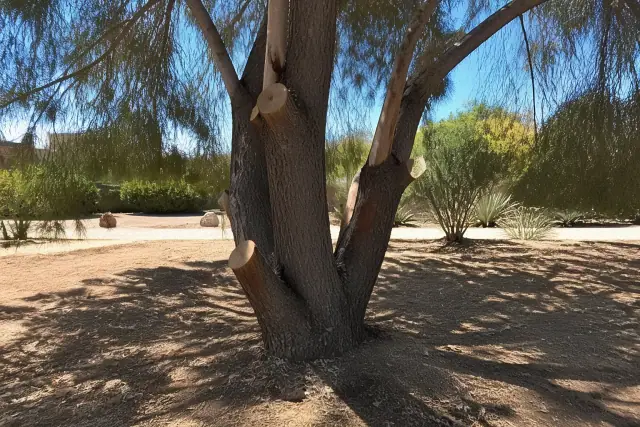
Tree trunk and pruned branches showing deadwood removal in Phoenix, AZ.

Seasonal Residential and Commercial Care

Most Phoenix homes benefit from trimming once or twice a year, while commercial properties often need a predictable grounds-maintenance schedule. Timing and cut intensity change with weather and use.

  • Dormant-season trimming from November through February for most species
  • Lighter post-monsoon visits for storm-stressed deadwood
  • Minimal summer cutting except for needed hazard removal
  • Consistent clearance near HOA and office-park walkways
  • Coordinated canopy care across retail parking areas
Request Estimate
Freshly trimmed tree canopy and wood chips on the ground after landscape work in Phoenix, AZ.

Landscape Support After Tree Work

When tree work changes a planting area, related landscape services can restore the site and address conditions that affect future tree health.

  • Debris hauling after trimming or removal
  • Site grading for a finished planting area
  • Preparation for new plantings or adapted desert species
  • Decomposed granite or gravel groundcover
  • Drip-line and failed-emitter irrigation repair
Request Estimate
Finding the Right Fit

Choosing the Right Trimming Approach

The right plan depends on species, canopy size, attachment angles, access, nearby structures, and the reason for trimming. Our recommendations start with the tree and property conditions, then apply the standards, seasonal knowledge, and controlled work practices the job requires.

ANSI A300-Based Pruning

ANSI A300 standards guide branch selection, cut placement, and canopy limits. Cuts stay just outside the branch collar so the tree can seal the wound naturally rather than leaving heartwood exposed by a flush cut.

Phoenix Desert Tree Knowledge

Palo verdes, mesquites, desert willows, and other Valley trees grow and recover on rhythms shaped by monsoon rain, dry heat, and dormancy. We avoid generic routines that ignore the stress created by heavy summer cuts or lost bark shade.

Property-Conscious Work

Limbs near block walls, pools, roofs, fences, irrigation, and plantings require slower, controlled cutting. Crews rig heavier sections when needed, carry liability coverage, and explain the estimate before work starts.

What Sets Us Apart

Why Choose Us for Phoenix Tree Trimming?

Our arborist-trained crews assess branch structure, tree health, and site access before recommending work. You receive a walk-through estimate, a pruning plan grounded in desert conditions, and careful handling around the features that make your property harder to access.

Request a Tree Assessment

Deadwood Under Wind Load

Long dry stretches allow deadwood and overextended limbs to accumulate. When monsoon gusts arrive, those weak sections can fail with little warning over vehicles, roofs, fences, or walkways.

Weak Branch Attachments

Included bark and codominant stems create weak unions that may split under wind load even when the canopy looks healthy. Early evaluation allows competing leaders or poorly attached branches to be managed before a major failure.

Topping and Weak Regrowth

Topping removes the upper crown to control height but triggers fast epicormic shoots with weak attachment. That regrowth is more likely to fail in later monsoons and can significantly shorten the tree's functional life.

Over-Thinning and Sunscald

Removing too much interior growth exposes previously shaded bark to Phoenix's intense summer sun. Desert natives need selective thinning that preserves enough canopy shade to reduce sunscald risk.

Storm-Damaged Hanging Limbs

A limb that is split, hanging, or partially detached after a microburst can shift or fall as the tree moves. Prompt hazard removal reduces the risk while the remaining tree is evaluated for recovery.

Hidden Tree and Irrigation Stress

Bacterial wetwood, borer damage, root girdling, cracked drip lines, and failed emitters can weaken a tree before dieback becomes obvious. Trimming visits provide an opportunity to identify those signs and decide whether pruning or irrigation repair should come first.

How It Works

Our Tree Trimming Process

The process moves from site conditions to tree structure, a defined pruning plan, controlled cutting, and cleanup. Each step keeps the work tied to a clear purpose and gives you the estimate before cutting begins.

01.

Walk-Through and Estimate

We walk the property to review tree height, canopy density, access, and nearby features. Pricing is explained per tree before work starts, including any added labor for difficult access or debris volume.

02.

Canopy and Health Assessment

The crew checks branch angles, deadwood load, crossing limbs, competing leaders, trunk integrity, root stability, and visible disease signs. This separates routine pruning needs from defects trimming may not be able to correct.

03.

Purpose-Built Pruning Plan

We select thinning, raising, reduction, deadwood removal, or a combination based on the tree and clearance goals. Species, season, and remaining live canopy guide how much work belongs in one visit.

04.

Controlled Branch Removal

Cuts are made outside the branch collar, with dead and hazardous material handled first. Heavy limbs above structures or plantings are rigged and lowered in sections to control their path.

05.

Debris and Site Cleanup

Cut branches and debris are collected so the yard, walkway, or commercial grounds are left ready for use. When a removal has opened the site, cleanup can also include hauling, grading, and preparation for new groundcover or plantings.

06.

Seasonal Maintenance Planning

We match the next visit to the tree's condition, species, and seasonal stress. Homeowners may plan a dormant-season trim and a lighter post-monsoon check, while commercial properties can coordinate recurring canopy clearance with grounds maintenance.

Plan Your Tree Care

Schedule a Phoenix
Tree Trimming
Estimate

Request a property walk-through to review canopy condition, access, and the trimming approach that fits your tree. Phoenix Expert Landscaping will explain the scope and price before work begins.

Tree Trimming Help

Tree Trimming FAQs

These answers cover Phoenix tree trimming prices, timing, pruning methods, storm work, property access, and ongoing maintenance. A walk-through is the best way to match general guidance to a specific tree.

Call Our Experts

Most small to mid-size Phoenix tree trimming jobs fall between $75 and $450, while larger or hard-to-access trees can cost more. Small ornamental trees under 20 feet often run $75 to $150, and mature shade trees in the 30 to 60 foot range can run $200 to $450 depending on deadwood and access. A walk-through provides a specific per-tree estimate before work starts.

Arizona law generally allows an owner to trim branches crossing onto their property up to the boundary, as long as the work does not harm the tree or violate local ordinances. You typically cannot enter the neighbor's property or trim at the source without permission. Discuss the boundary and tree health before scheduling cuts.

For most species, the preferred Arizona trimming window runs from November through February, when cooler conditions reduce stress and sap loss. A lighter visit after monsoon season can remove storm-stressed deadwood. Hazard removal may still be necessary in summer, but heavy cutting during extreme heat should stay limited.

Most Phoenix homeowners get good results with trimming once or twice a year: a dormant-season visit before spring growth and, when needed, a lighter post-monsoon cleanup. The right frequency depends on species, growth rate, condition, and clearance needs. Commercial properties may use recurring schedules to keep multiple canopies consistent.

ANSI A300 provides a baseline for choosing pruning objectives and making proper cuts. On this page, that means selecting cuts for thinning, raising, reduction, or deadwood removal and cutting just outside the branch collar. It also means avoiding topping and excessive canopy removal.

Topping removes the upper crown to control height and triggers fast epicormic growth. Those shoots are weakly attached and more likely to fail during a later monsoon. Crown reduction is the supported alternative when a tree has outgrown its space.

The source limits removal to no more than 25 percent of a tree's live canopy in a single visit. Some trees need less because species, heat, existing stress, and sun exposure affect recovery. The goal is to improve structure without forcing the tree into a stress response.

Summer trimming is possible when a hazardous branch must be removed, but heavy pruning should stay minimal during 110-degree stretches. Opening the canopy too far can expose interior wood and bark to sunscald. Non-urgent structural work is often better scheduled for cooler conditions.

The source specifically discusses palo verdes, mesquites, desert willows, ash trees, eucalyptus, and palms. Multi-trunk desert species can take longer to thin because their branching structure needs careful selection. Timing and cut intensity should reflect how each tree handles heat, monsoon growth, and dormancy.

Tree height, canopy density, species, deadwood volume, equipment access, and proximity to power lines all affect the estimate. A palm needing frond removal at 40 feet is different from a low mesquite spreading over a patio. Pools, block walls, irrigation lines, and storm debris can add labor because branches must be handled more slowly.

The first priority is identifying hanging, partially detached, dead, or storm-weakened limbs that could fall. Hazardous sections may be removed while the remaining trunk, leaders, and root plate are assessed. During peak monsoon weeks in July and August, storm calls receive scheduling priority when crew capacity allows.

Trimming may not correct root rot, major trunk cavities, a split main leader, or serious root-plate instability. Arborist-trained crews assess whether targeted pruning can preserve the tree or whether it has become a hazard. Full removal and stump grinding require specialized equipment beyond the trimming scope described here.

Yes. Seasonal maintenance packages can combine tree trimming with lawn care or broader landscape maintenance, which reduces the per-visit cost compared with one-off calls. Related work may also include shrub and hedge trimming, weed control, irrigation repair, yard cleanup, or rock and gravel landscaping.