Prune by Species and Season
Phoenix has three practical windows: winter dormancy for structural pruning, early spring for light shaping, and early summer for native desert trees.
Phoenix Expert Landscaping schedules tree trimming around each species and the Salt River Valley growing cycle because timing affects recovery, frost exposure, heat stress, and monsoon wind resistance. Most non-native deciduous trees are best pruned during winter dormancy, while palo verde and mesquite generally respond best from May through early June.
Phoenix has three practical windows: winter dormancy for structural pruning, early spring for light shaping, and early summer for native desert trees.
The early-spring window runs roughly from mid-February through late March, after frost risk drops but before triple-digit heat. Major cuts above 105 degrees can expose bark to sunburn and slow recovery.
Inspect for dead wood, cracked limbs, disease indicators, crossing branches, and dense growth that could catch monsoon winds. Safety pruning can take priority over the ideal seasonal window.
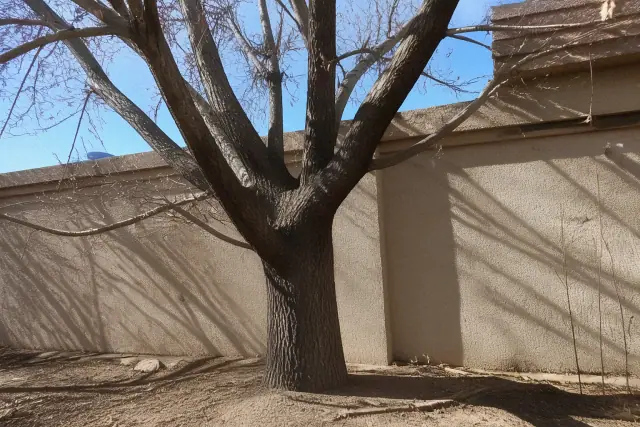
Dormant ash, elm, and mulberry trees reveal their branch architecture once leaves drop. Dead wood and cracked or crossing limbs are easier to identify in this condition.
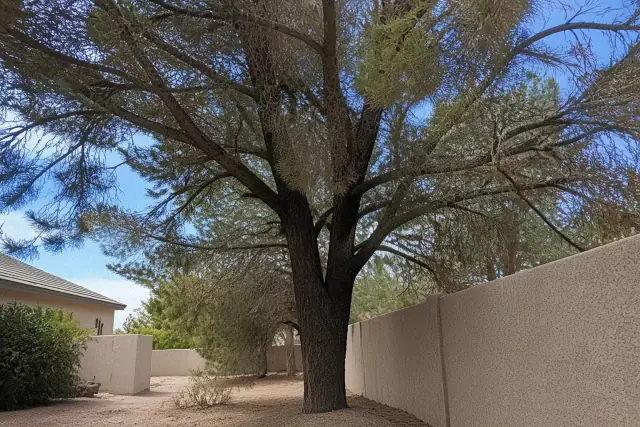
A dense palo verde or mesquite canopy catches more wind than one selectively thinned before monsoon season. Proper thinning reduces wind load while preserving healthy shade.
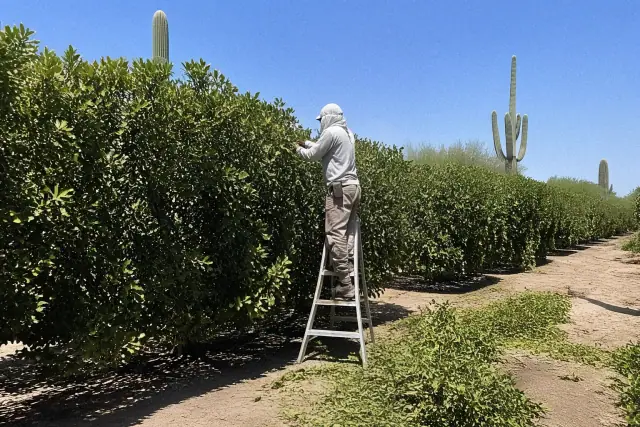
After the mid-February frost-risk window, citrus pruning should focus on dead wood and crossing branches. A full canopy helps protect bark and fruiting growth from sun exposure.
Use this core winter window for non-native deciduous trees such as ash, elm, and mulberry. Conifers also follow the winter-dormancy rule.
Lightly shape citrus once frost risk drops, and handle late-winter oleander trimming or lantana cutback after frost risk. Treat late March as a soft deadline before fresh growth and summer heat.
Palo verde and mesquite fit the May-through-early-June active-growth window, while sissoo can tolerate pruning from May through August. After mid-June, shift toward monsoon-prep thinning rather than heavy structural cuts.
Dead, diseased, hazardous, or storm-damaged limbs can be removed year-round. Even then, avoid taking more than one-third of the live canopy or making broad cuts during peak heat.
| Tree Type | Best Window | Pruning Focus |
|---|---|---|
| Ash, elm, and mulberry | December-January | Structural pruning during winter dormancy |
| Citrus | Starting mid-February | Light shaping, dead wood, and crossing branches |
| Palo verde and mesquite | May-early June | Active-growth pruning before peak heat |
| Sissoo | May-August | Manage fast growth and canopy structure |
| Conifers | Winter dormancy | Prune while growth has slowed |
| Oleander and lantana | Late winter after frost risk | Shape oleander; cut lantana near the base |
There is no single Phoenix trimming date for every tree. Cooler winter dormancy suits most structural work on non-native trees, active early-summer growth suits palo verde and mesquite, and limited safety cuts can happen year-round. Matching the cut to the species and season helps reduce sap loss, slow-healing wounds, bark sunburn, pest exposure, and dieback.
Native desert trees callus quickly during active growth, while imported deciduous trees recover best in winter dormancy. Frost can damage fresh citrus cuts, and peak summer heat can stress a tree that loses too much shade-producing canopy. Phoenix's monsoon season typically runs from June through September, so dense mature mesquite and palo verde can benefit from selective wind-resistance thinning before storms without resorting to topping.
How much does trimming cost, how often is it needed, and which cuts should be avoided? Phoenix tree trimming typically runs $250 to $700 per tree, while commercial and multi-tree properties often fall between $400 and $800 per tree depending on size, species, and access. Most landscape trees do well on a 12-to-24-month routine, although fast-growing sissoo may need attention more often and native trees benefit from an annual check. Avoid topping and flush cuts because they can encourage weak regrowth or remove the branch collar that supports healing.
Across Phoenix's 517.9 square miles, conditions can vary from Arcadia and Encanto to Ahwatukee and Desert Ridge. A tree assessment can account for species, canopy condition, frost exposure, summer heat, irrigation, and HOA landscaping requirements. Pruning should follow ANSI A300 standards while avoiding topping, flush cuts, and unnecessary canopy removal.