Proudly serving Phoenix, Scottsdale, Mesa, Tempe, Chandler, Gilbert & surrounding areasCall or Text 24/7: 602-449-0493
Guides

Identifying and Managing the Most Frequent Weeds in Phoenix, Arizona Landscapes

Phoenix Expert Landscaping identifies and treats puncturevine, Bermuda grass, spotted spurge, silverleaf nightshade, Palmer's amaranth, and other common weeds every week on residential and commercial properties across the Salt River Valley. Accurate identification matters because annuals, deep-rooted perennials, sedges, and invasive grasses respond to different removal methods and treatment timing. This guide explains how to tell the main Phoenix weeds apart and what helps keep them from returning.

Quick Summary

  • Puncturevine, Bermuda grass, spotted spurge, silverleaf nightshade, and Palmer's amaranth are among the most common weeds in Phoenix.
  • Local weeds include seasonal annuals, deep-rooted perennials, and aggressive grassy invasives such as buffelgrass, stinknet, and johnsongrass.
  • Pre-emergent timing matters most from late January through February and again in August, before the main germination windows.
  • Phoenix-area professional weed control typically costs $184 to $275 per treatment; mechanical removal may be priced by the hour or lot size.

How to Recognize Phoenix Weeds

Common Phoenix Weeds

Start with puncturevine, Bermuda grass, spotted spurge, silverleaf nightshade, and Palmer's amaranth. These frequent Phoenix weeds range from low mats and spreading grasses to upright broadleaf plants with deep roots or prolific seed heads.

Identification Clues

Compare leaf shape, stem cross-section, flower structure, seed heads, and growth habit. Mat-forming, upright, or vining growth helps narrow the species, while roots distinguish seasonal annuals from persistent perennials.

Treatment Timing

Remove established weeds before seed set, then time pre-emergent treatment for late January through February and again in August. Broadleaf and grassy species often need separate targeted post-emergent treatment rather than one product for everything.

Phoenix Weed Identification Views

Leaf Shape, Flowers, and Growth Habit

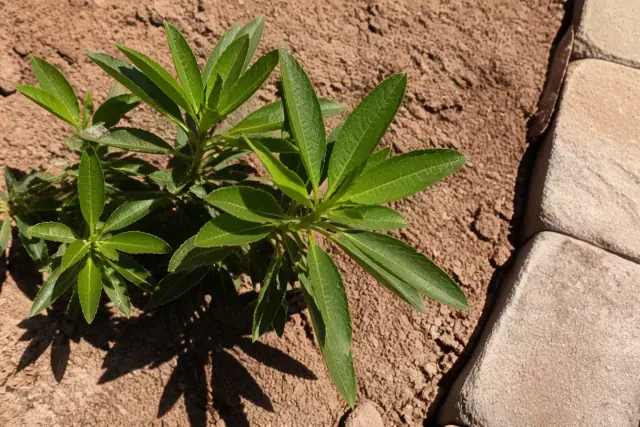
Leaf shape and flowers growing in a stone-edged garden planter bed in Phoenix, AZ.

A side-by-side view should compare leaf margins, flower color, and mat-forming, upright, or vining growth. Those visible traits quickly separate many broadleaf weeds.

Roots, Rhizomes, and Underground Regrowth

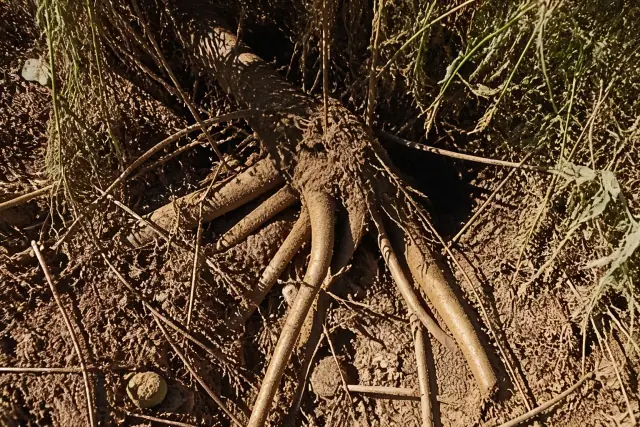
Close-up of thick plant roots and rhizomes emerging from sun-bleached desert soil in a Phoenix, AZ yard.

The difference between a taproot, fibrous roots, rhizomes, and spreading stolons. Underground growth explains why Bermuda grass, field bindweed, and yellow nutsedge return after shallow pulling.

Phoenix Weed Germination Windows

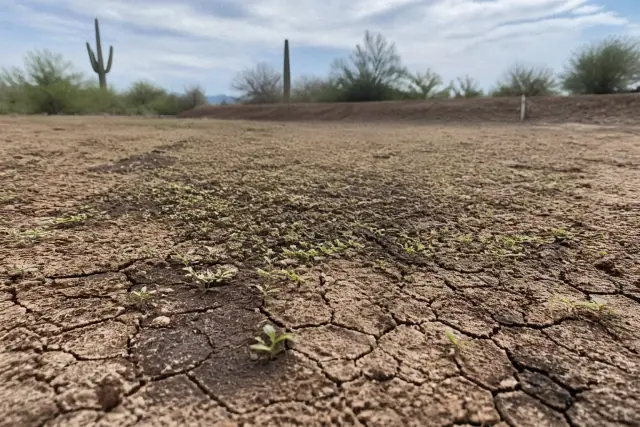
Tiny green weed sprouts emerging from sun-baked, cracked soil in Phoenix, AZ.

A seasonal calendar should show spring and summer annuals, monsoon reseeding, and the late-winter and August pre-emergent windows. Timing treatment before germination prevents a small problem from becoming a full seed cycle.

Phoenix Weed Control Snapshot

Start With the Stem and Leaves

Grasses usually have parallel-veined leaves and fibrous roots, while broadleaf weeds have net-veined leaves and often a taproot. A triangular stem points to yellow nutsedge rather than a true grass.

Annual, Perennial, Sedge, or Grass

Annual weeds complete their life cycle in one season, while perennials return from established roots year after year. Sedges and invasive grasses require identification beyond a general broadleaf-versus-grass comparison.

Act Before Seed Set

Puncturevine produces hardened burs by early summer, and one missed johnsongrass or puncturevine removal cycle in July or August can create another problem by September. Remove seed-producing plants before they mature.

Do Not Pull and Stop

Shallow pulling or tilling leaves behind the roots and rhizomes of field bindweed, Bermuda grass, and yellow nutsedge. Puncturevine burs can also persist in soil for years, so follow-up monitoring matters after removal.

Weed Identification Chart

Visual ClueLikely WeedWhat It Signals
Reddish trailing stems and yellow flowersCommon purslaneA heat-loving summer annual common in gravel and cracks.
Low mat with milky sapSpotted spurgeA peak-summer annual that spreads across gravel and pavement gaps.
Silvery leaves and purple star-shaped flowersSilverleaf nightshadeA perennial with toxic yellow berries and a deep taproot.
Triangular stemYellow nutsedgeA perennial sedge often associated with excess irrigation or leaks.
White midrib and reddish-purple seed panicleJohnsongrassA state-listed noxious grass that spreads along canals and ditches.
White morning-glory-shaped flowersField bindweedA perennial vine with roots extending 10 feet or more underground.

Which Weeds Are Common in Phoenix?

Sixteen species make up the bulk of weed-control calls across Maricopa County. The broadleaf group includes Palmer's amaranth, purslane, silverleaf nightshade, pigweed, spotted spurge, and puncturevine; grassy or grass-like problems include Bermuda grass, crabgrass, yellow nutsedge, southern sandbur, and johnsongrass. The four regulated invasives highlighted here are buffelgrass, stinknet, fountain grass, and johnsongrass, which spread aggressively through disturbed desert areas, roadsides, canals, irrigation ditches, and preserve trails.

Why the Right Control Method Varies

Phoenix's year-round irrigation, low-desert heat, and monsoon humidity spikes create different germination and regrowth patterns. Crabgrass starts germinating when soil reaches the mid-60s, yellow nutsedge favors overwatered turf and leaking irrigation, and buffelgrass adds wildfire fuel on desert slopes near South Mountain Park. Palmer's amaranth can reach 6-8 feet, while field bindweed roots can extend 10 feet or more underground, so surface growth alone does not reveal the full problem. No herbicide-resistant weed populations have been confirmed in Arizona to date, but a single product rarely handles both broadleaf and grassy species effectively.

Common Follow-Up Questions

To identify an unknown weed, compare leaf veins, stem shape, flowers, seed heads, and whether it forms a mat, stands upright, or vines; photos help narrow the options, but look-alikes can require an on-site inspection. The hardest weeds to eliminate are field bindweed, Bermuda grass, and yellow nutsedge because they regrow from deep roots, rhizomes, or underground structures. Natural suppression options include hand-pulling, soil solarization during peak summer heat, and maintaining 2-3 inches of mulch or decorative gravel over bare soil. Professional treatment in the Phoenix area typically costs $184 to $275, while mechanical pulling runs roughly $27 to $35 per hour or may be priced by lot size.
Ask a Local Pro

Need Help Identifying a Weed?

Send clear photos and note where the weed grows, when it appeared, and whether irrigation reaches the area. An on-site inspection can distinguish look-alikes and determine whether mechanical removal, pre-emergent timing, or targeted post-emergent treatment fits the species.