Extreme Heat and Low Rainfall
Plants must survive both limited natural moisture and punishing summer temperatures, making irrigation design and root-zone conditions central to landscape survival.
Landscaping in the Salt River Valley means working against minimal rainfall, alkaline soil, intense summer heat, and hard water. At Phoenix Expert Landscaping, we've seen these same challenges affect residential yards and commercial properties across the Phoenix metro area.
Plants must survive both limited natural moisture and punishing summer temperatures, making irrigation design and root-zone conditions central to landscape survival.
Caliche soil can keep plants from taking up iron, while calcium and magnesium in irrigation water build scale inside emitters and valves.
Match plants to desert conditions, install them at the right depth, and deliver enough water without creating the overwatering that harms desert-adapted species.
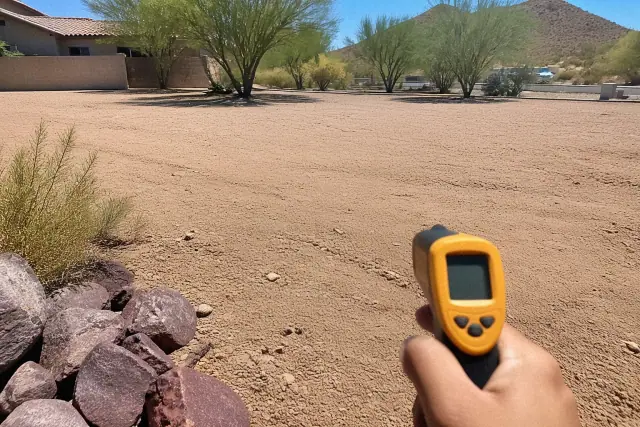
Surface heat reaching a shallow root zone. This explains why planting depth and heat exposure matter even when irrigation is present.
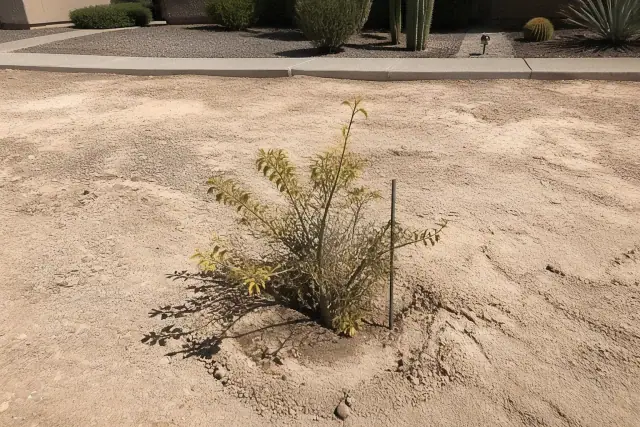
Yellowing leaves beside compact alkaline soil. The contrast helps readers connect iron lockout with visible plant stress.
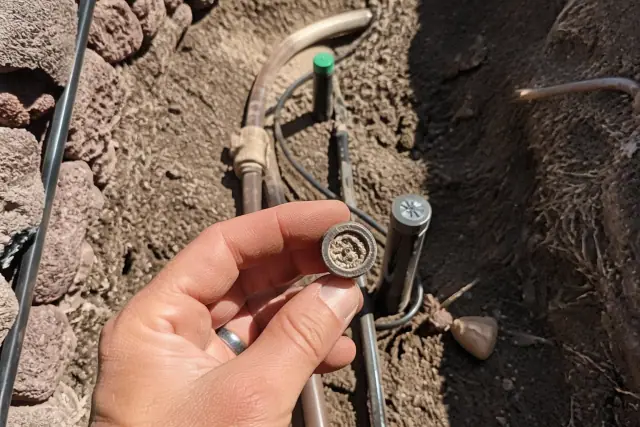
Calcium and magnesium buildup narrowing the water path. This makes an invisible cause of uneven irrigation easy to recognize.
Phoenix is in USDA Hardiness Zone 9b, but plant choices must also tolerate alkaline soil, low humidity, and intense UV exposure.
The roughly mid-June through September monsoon can deliver intense bursts of rain that sharply contrast with the region's otherwise dry conditions.
When plant selection, soil conditions, or irrigation is wrong, visible stress can appear within weeks rather than over an entire season.
More irrigation is not automatically safer: overwatering kills more desert-adapted plants than underwatering.
| Challenge | What It Does | Practical Response |
|---|---|---|
| Low rainfall | Makes natural precipitation too limited for dependable landscape watering. | Use engineered irrigation matched to plant needs. |
| Alkaline caliche | Locks out iron and can cause chlorosis in poorly matched plants. | Choose plants for alkaline conditions and watch leaf color. |
| Extreme heat | Stresses shallow or deeply buried roots beneath hot soil and rock. | Match planting depth and root-zone protection to the site. |
| Hard water | Calcium and magnesium buildup can clog drip emitters and valves. | Inspect irrigation components for mineral scale and flow loss. |
Phoenix sits in the Sonoran Desert within the Salt River Valley, with over 1.6 million residents spread across 517.9 square miles. From central Phoenix courtyard xeriscapes to multi-acre commercial sites near the Sun Corridor, landscapes share low humidity, intense UV exposure, limited rainfall, and demanding soil and water conditions.
A workable plan must account for caliche, plant depth, irrigation scale, sun exposure, and sudden monsoon rainfall; storms can drop more rain in an hour than the rest of the year combined. Skilled-labor shortages in the green industry can also slow project timelines, making an experienced, licensed crew important for involved work.
Which plants are easier to maintain? Start with species suited to Zone 9b, alkaline caliche, low humidity, and intense UV. Why do drip systems fail? Calcium and magnesium can calcify emitters and valves. Is extra water the safest response to stress? No-overwatering can be more damaging than underwatering for desert-adapted plants.
Share whether the issue involves chlorosis, heat stress, or a clogged emitter and whether it affects a residential yard or commercial property. A local landscape professional can compare plant fit, soil conditions, and irrigation before recommending work.